

▶ Watch the full episode: youtu.be/_fpaxUOlP3w
Somebody in that conversation said it plain: “We can either be homeowners of our politics, or we can be renters. And at any moment, rent can go up. We can get evicted.”
That’s where we are. Not where we’re headed — where we are right now.
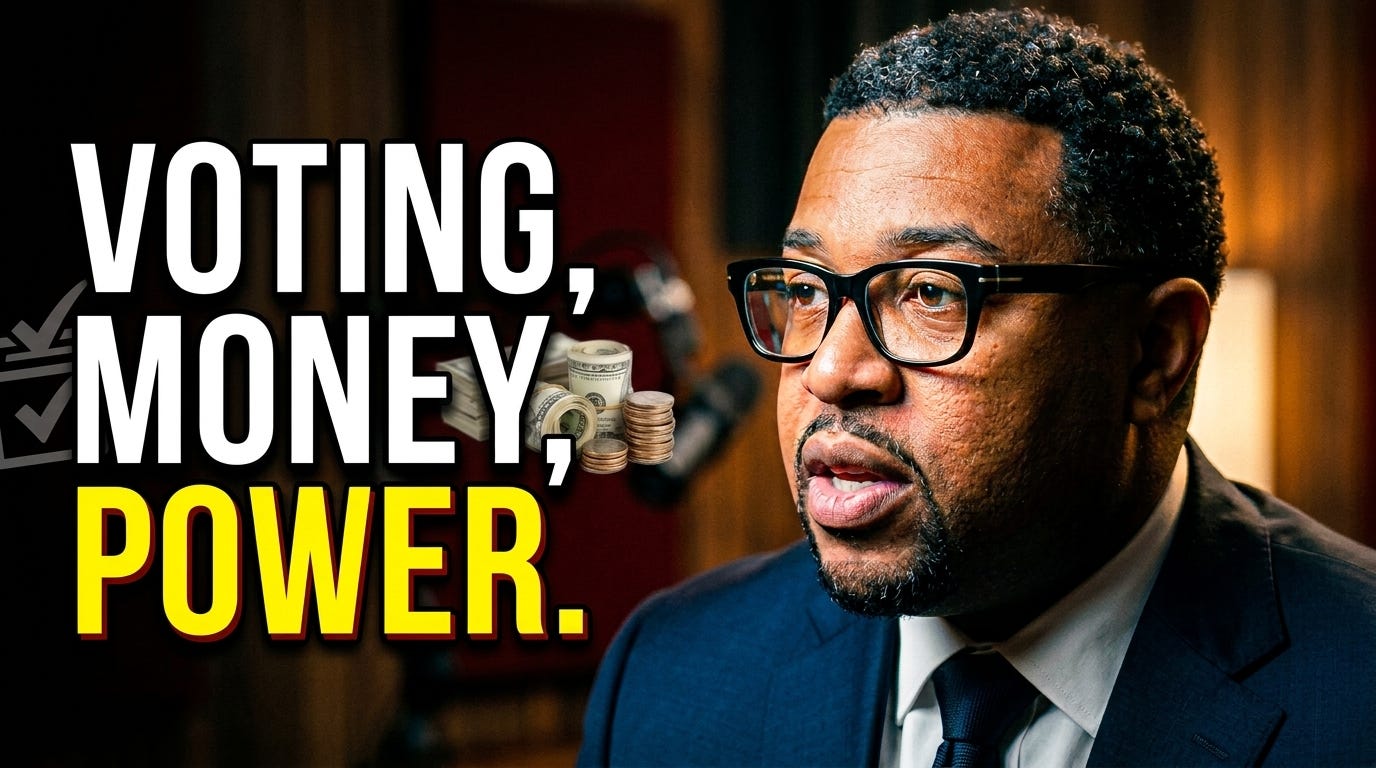
On the latest episode of Strategic Moves with Kenn Dowell, I sat down with Quentin James — founder and president of the Collective PAC, one of the largest Black political action committees in the country. Over ten years, they’ve raised more than $50 million and helped elect over 500 Black leaders, from city council to Congress. But the bigger question on the table wasn’t what they’ve done. It was whether any of it is really ours.
What Is a PAC — And Why Does It Matter?
Most people hear the word “PAC” and either tune out or assume it’s dirty politics. Quentin broke it down simply: a PAC is a legal mechanism to bundle and organize money around a cause. The NRA has one. AIPAC has one. The question has always been — when do we get one that actually works for us at every level?
That’s what Collective PAC was built to be. Not just a check-writing machine for name-brand candidates, but an infrastructure play — one that works on school boards, city councils, state legislatures, and federal races. Because Quentin’s point is hard to argue with: if we’re not in the room when decisions get made, we’re on the menu.
The Kamala Receipts Nobody Wants to Talk About
Quentin said something in this episode that I want people to sit with. Kamala Harris raised over a billion dollars in 107 days. Her campaign — run largely under white leadership — spent less than 3% of that with Black vendors.
And the single largest Black-owned vendor to benefit? A car company that drove staff from the airport to the campaign office.
That’s not an accident. That’s a system working exactly the way it was designed. We are the base. We are not the beneficiaries. And until we own the infrastructure — the data, the media, the consultants, the printers, the mail firms — we will keep being the engine that somebody else drives.
“If you’re not at the table, you’re on the menu. We don’t just want a seat at the table — we want our own table.”
The New Generation Problem Is Real — But It’s Not What You Think
There’s a conversation happening right now — online, in churches, in barbershops — about whether this generation is willing to fight. Quentin didn’t dodge it.
He said the cynicism is justified. For the first time in modern history, this generation is economically worse off than their parents. The marches happened. The hashtags trended. The progress on paper doesn’t match what people feel in their pockets. So yeah — the frustration is real.
But the bigger threat is what white supremacy and the tech world are doing together: pushing a colorblind narrative across every platform, on all sides, for this next generation. We are being outgunned online in the battle to explain what’s really happening.
That’s exactly why platforms like this one — Black-owned, independent, civic-focused — aren’t optional anymore. They’re infrastructure.
Black Men Are Not Unmotivated — They’re Disrespected
I pushed Quentin on this directly. There’s culture fatigue out here. Brothers aren’t showing up, not because they don’t care — it’s because every election cycle, we get treated like votes to harvest in October and ignored in November.
Quentin was unambiguous: yes, the party has taken Black men for granted. That’s documented. That’s proven. And the fix isn’t a speech — it’s receipts. Candidates need to come with what they’ve actually delivered for Black communities. And if they don’t have receipts, they'd better start creating them.
He also said something that cut through the noise: stop making criminal justice reform the only issue you talk about with Black men. We care about jobs. Wealth. Education. Healthcare. Not every Black man has been in the system. Everybody deserves to be spoken to about the full scope of their life.
2026 Is Not Optional
We talked about the Ohio governor’s race, Amy Acton, and what it means for Cleveland and Cuyahoga County. Quentin was direct: as Cleveland goes, the state goes. We need high turnout here, and we need Black-led organizations controlling how dollars flow into our community engagement — not white-led party committees deciding how to spend money in our neighborhoods with their people.
And he brought up something I’ve been saying for years: the two Black activist mayors who lost — Tishaura Jones in St. Louis and Ed Gainey in Pittsburgh — didn’t lose because they were bad leaders. They lost because we didn’t back them up. We let them get picked off by local deals and backroom promises. We can’t keep doing that.
2025 was a recovery time. 2026 is go time.
The Biggest Threat to the Movement? Division.
I asked Quentin flat out: What’s the biggest threat — money, ego, division, or fatigue?
He said division. Ego burns itself out. Fatigue ebbs and flows. But division wastes time and money — and those are exactly the resources we don’t have to waste in this moment. When multiple Black candidates split a vote in a major state like Georgia, we hand the race to someone else. We’ve done it before. We can’t afford to keep doing it.
The Bottom Line
Quentin James ended with something that landed hard. He said: if you ever wondered what you would have done at the height of the civil rights movement, this is that moment. Right now. The threats are real. The window is closing. And what we do in the next few years will shape Black life in America for the next thirty to fifty.
So the question I’ll leave you with is simple: Are you a homeowner in your politics — or are you still renting?
▶ Watch the full episode on YouTube: youtu.be/_fpaxUOlP3w
🔗 Learn more about Collective PAC: collectivepac.org
📬 Subscribe to the Strategic Moves newsletter: aStrategicMove.com
— SUBSTACK SEO TAGS —
Black political power, Collective PAC, Quentin James, Black voters 2026, Ohio governor race, Black PAC, Black media infrastructure, Black men and politics, Strategic Moves with Kenn Dowell, Cleveland politics, midterm elections 2026, Black civic engagement, Amy Acton Ohio, Black political strategy
I want to hear from YOU directly on this one.
Quentin James laid it out plain: Black America can either be homeowners of our politics — or renters. And renters can get evicted at any time.
We've been the base of the Democratic Party for over 60 years. We've marched. We've organized. We've delivered margins that won elections. And Kamala Harris raised over a billion dollars — and spent less than 3% of it with Black vendors.
So I'm asking the question I didn't get to ask in the episode:
👇 Are YOU a homeowner or a renter in your politics right now?
Not your party. Not your candidate. YOU — personally. Are you invested, organized, and building something that lasts? Or are you showing up every two to four years and hoping somebody else handles the rest?
Drop your honest answer below. This conversation doesn't end with the episode — it starts here.
And if this hit you, share it with somebody who needs to hear it. The comment section is open. Let's build.
— Kenn
🔗 Watch the full episode: http://youtu.be/_fpaxUOlP3w
🔗 Learn more about Collective PAC: http://collectivepac.org
📬 Subscribe for weekly civic intelligence: http://astrategicmove.com