


"This is Kenn Dowell. Cleveland-born, Glenville-raised, and never afraid to say what needs to be said."
Before we get into it — thank you for reading Strategic Moves. If you’re new here, welcome. If you haven’t already, subscribe for free — it costs you nothing and makes sure you never miss a breakdown. And if this work is worth more to you than the free tier, a paid subscription helps keep this operation running and keeps the analysis coming every week, no matter who’s uncomfortable with it. Either way — glad you’re here. Let’s get into it.
I Was in the Room
Twenty-five years in the rooms where this county’s decisions get made. I’ve said that before. I’ll say it again here because it matters for what comes next: I was one of the people at the table in 2009 when Cuyahoga County threw out the old government and built the one we’re operating under right now. Not watching from outside. In the room.
Retired Judge Michael Nelson was in that room too. We said it together, out loud, on my own show this week, because it’s time the record was straight: the elected sheriff was one of the biggest pieces left on the table when we built this government. The reason it got left there wasn’t an accident. And it wasn’t really about the sheriff.
What We Actually Traded Away
Here’s the truth. At that moment, in 2008 and 2009, many of the African American leaders in that room did not believe we could win an elected sheriff outright. Not for lack of candidates. We ran Clayton Harris for it and lost. We looked hard at Sandra Williams, military background, fully qualified, and still couldn’t make it happen. Not for lack of will.
It was the relationship. The relationship between the African American community and the Cuyahoga County Democratic Party at that time was tumultuous, and had been for years. Getting our people elected to anything countywide — judgeships, commissioner seats, recorder, any of it — was a fight in that political climate, at that particular moment.
So when the government got rebuilt, the calculation among Black leadership wasn’t “let’s choose appointment.” It was survival math: we don’t believe we can win this seat right now, so get one guaranteed point of access instead of none.
An appointed sheriff wasn’t the goal. It was the fallback position of people who’d already run the numbers on an election they didn’t think they could win.
One Guaranteed Seat Is Not a Movement
It worked, briefly, the way it was designed to. The first sheriff under the new government was a Black man, appointed under Ed FitzGerald. Then it stopped working, because a single appointed seat depending on one executive’s discretion was never power. It was an arrangement. Arrangements end the day the person who made them leaves office or changes their mind.
Look at what elected countywide power actually looked like when Black candidates could win it outright. Virgil Brown and Peter Lawson Jones, elected county commissioners, running their own departments, answering to voters, not a boss. Stephanie Tubbs Jones, elected prosecutor, four hundred people under her, and when the government got rebuilt in 2009, that’s the office everybody in the room agreed had to stay elected.
There’s a difference between a seat you’re given and a seat you win.
We knew the difference then. We settled for the fallback on the sheriff anyway, because in that specific moment, winning it outright looked out of reach.
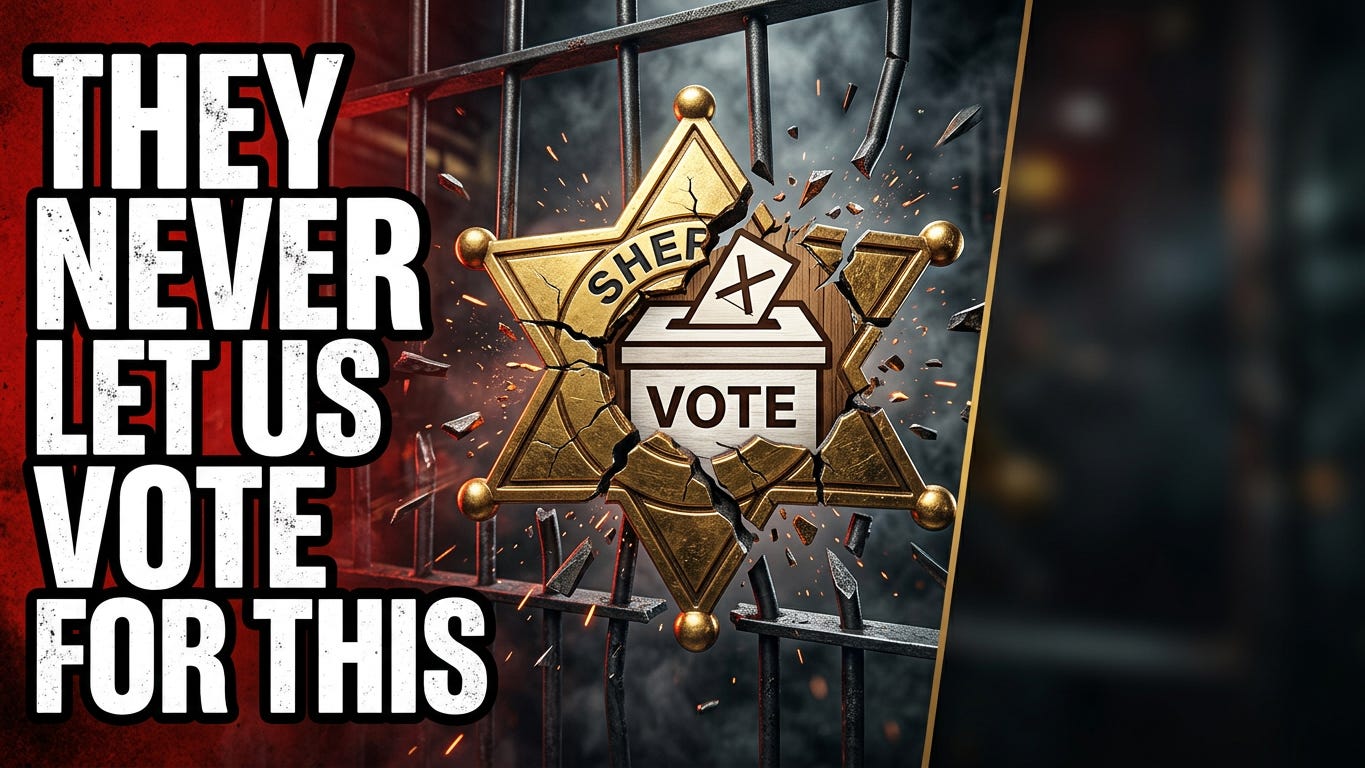
That Calculation Doesn’t Hold Anymore
Judge Nelson said it on my show. I’ll say it here without hedging: it should have been elected. The politics in that room in 2009 didn’t allow it, and that backfired terribly. Nine sheriffs in fifteen years, spanning three different executives. A jail with a body count that made the county’s own prosecutor read a number into the record at Council. None of that is what anyone at that table was trying to trade for.
But the reason we settled — the belief that Black Cleveland couldn’t win a countywide seat outright in that political climate — isn’t the reality of 2026. Twenty years of organizing. Twenty years of a different relationship between Black political leadership and the county party than existed in 2008. What’s winnable has changed.
The insurance policy we took out because we didn’t believe we could win the real thing isn’t insurance anymore. It’s just a ceiling we agreed to a generation ago and never questioned again.
Dale Miller stood up last week and argued for keeping this exact arrangement, holding up Sheriff Pretel’s appointment as proof the system delivers for diversity. He’s making the same bet Black leadership made in 2009 — from the other side of the table now, defending it. We already know how that bet turns out. We watched it for fifteen years.
Where This Lands
I’m not telling you this to relitigate 2009. I’m telling you because the people who made that trade — myself included — are saying plainly, now, that it should have gone the other way, and the reason we didn’t fight for it then doesn’t hold anymore. Not nostalgia. A correction.
Here’s what I need you to do with that. Call your council member before August 4th. Don’t ask what they think about the sheriff’s office in general. Ask them this, word for word: do you believe the public has the right to choose who runs the county jail, or do you believe you can make that choice better than we can? Make them answer it straight. Not a dodge about qualifications.
Not a dodge about turnover. Not a hedge about commissions and studies and timing. Yes or no — does the public choose, or does somebody choose for us?
If they can’t answer that plainly, you already know how they’re voting on August 4th. And you know exactly what they think of you.
Tell me what you think in the comments. I want to hear where you land.
If this is the kind of civic intelligence you need, subscribe at kenndowell.substack.com. The work continues there.
This Substack is reader-supported. To receive new posts and support my work, consider becoming a free or paid subscriber.
I did call my county council person Yvonne Conwell, she was very transparent and will be voting to keep the position appointed.