


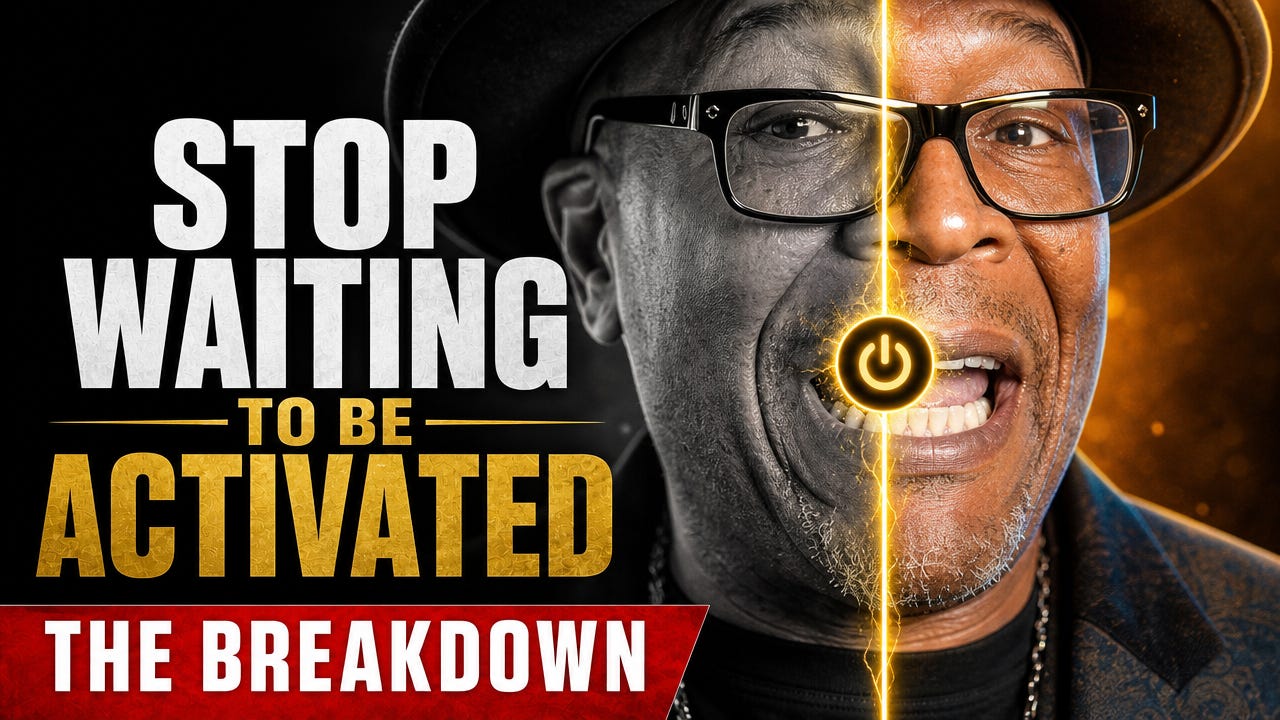
This is Kenn Dowell. Cleveland born. Glenville raised. And never afraid to say what needs to be said.
Somebody in Washington is supposed to save us every election cycle. That’s the story this district has told itself for almost sixty years. It was true, twice. It stopped being true in 2021, and nobody’s updated the plan.
Three Different Washingtons, One Congressional Seat
Carl Stokes won the Cleveland mayoral office in 1967 with twenty percent of the white vote and near-total Black support, a year after Hough burned. His brother Louis spent the decade as a civil rights attorney before becoming Ohio’s first Black congressman in 1968.
Carl learned his politics from John O. Holly, who organized Black economic boycotts decades earlier to force white businesses to hire. Leverage first, ballots second, built by the community itself.
But Louis didn’t just win a seat — he built a machine to hold it. Pinkney, Forbes, and Stokes ran Black Cleveland politics as a triumvirate for four decades: Pinkney the kingmaker, Forbes running City Council, Stokes the godfather with final word on any real dispute.
When Stokes retired in 1998, he proposed his own successor: Stephanie Tubbs Jones. When Tubbs Jones died suddenly in 2008, Stokes all but single-handedly chose the next one — Marcia Fudge, anointed in a closed-door meeting. Two successions. Neither one is an open contest. Both the machine working exactly as designed.
I ran point for Congresswoman Fudge as her political director for all thirteen years she held that seat, and I still work with her today. Fudge was never the loudest person in Washington — that was the strategy, not a limitation.
Thirteen years of quiet relationships got her a national budget to work with as HUD Secretary, the highest office anyone from this seat has held: millions into first-time homeownership, housing protections restored, targets beaten on rehousing the homeless. That’s what the discipline was for.
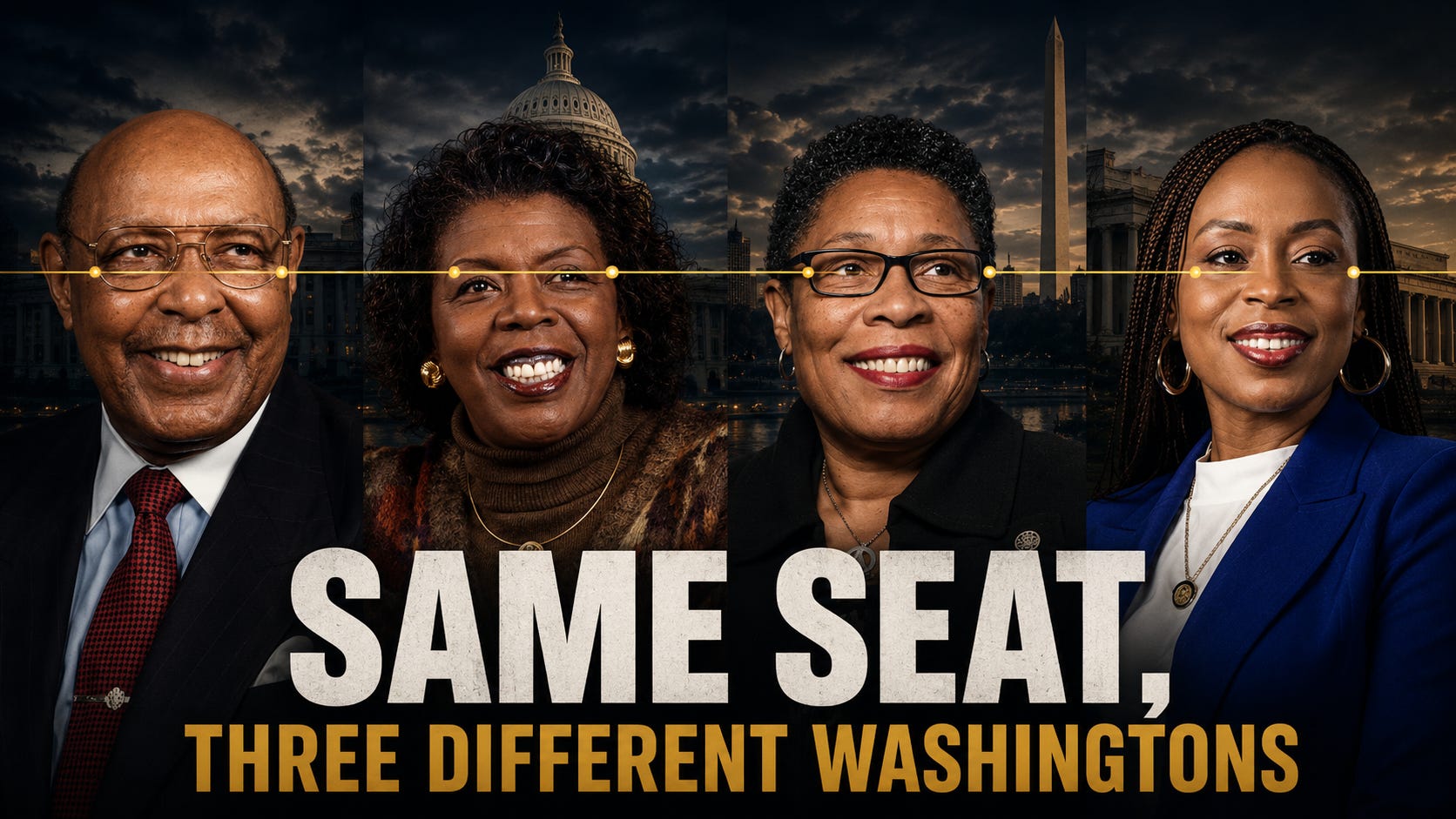
Here’s the most important difference in this whole story: Shontel Brown is the first person in this seat’s modern history who wasn’t handed it by the machine. Fudge couldn’t do for Brown what Stokes did for her — not because she didn’t want to, but because federal law wouldn’t let her. A sitting Cabinet secretary is bound by the Hatch Act, which bars using a federal office to pick a successor.
That door, the one Stokes walked through twice, was never open to her. So for the first time since 1968, there was no closed-door meeting, no proposed successor. Brown had to win it herself — against Nina Turner, a nationally known progressive backed by real money and infrastructure, twice, in 2021 and the 2022 rematch.
Same seat. Three different Washingtons — and only one of the three had to win it in the open. Brown isn’t the exception to this district’s tradition of machine-built power. She’s proof of what happens when the machine is gone and you have to build real power instead of inheriting it.
Here’s The Argument That History Sets Up.
You can see what that crutch cost in the apathy sitting in front of you right now. My generation lived that fight and felt what it cost.
This generation inherited the access — the campuses, the programs — without ever having to fight for it or feel why it mattered. A million Black men once stood together in one accord, and that energy carried the sisters straight through college and into the workforce behind them.
Too many of us didn’t keep that going. So this generation never got a movement of their own to stand inside. What they got instead was a stream of names.
Cyrus Carmack-Belton — fourteen years old, shot in the back over four bottles of water he never took, and the man who chased him down walked out of that courtroom a free man.
Karmelo Anthony — convicted by a jury with zero Black members, in a Texas county where exactly three Black jurors qualified and the prosecution struck every one of them.
Nolan Xavier Wells — eighteen years old, gone missing on a boat trip with friends, found two days later, and a family still waiting on a coroner’s report nobody’s finished. Three different states, three different circumstances, one lesson landing on the same generation over and over: the system doesn’t explain itself to you, and it does not remove itself for you.
This generation, the one coming up right now, has never been shown power working in the one form that would actually convince a skeptical seventeen-year-old: removal. Addition, we’ve done. Subtraction, we haven’t.
Here’s What I Mean, Plainly
Here’s what I mean, plainly. We tell a young man to vote for good judges. Fine. But when’s the last time we showed him the other half — a judge who hurt people, actually removed because we organized to do it? If the only lesson is “vote, and maybe something good happens eventually,” that’s a weak sell to somebody who’s never seen the reverse: vote, and something is removed, on purpose, because we said so.
Power you can’t see work doesn’t feel like power. It feels like a rumor.
There’s a reason we default to waiting instead of removing. This community has always been told which way to move — by King, by Malcolm, by whoever the machine picked — and the few who said build it yourself, like Huey Newton, got labeled dangerous for saying it. That’s a hard lesson to unlearn, and it’s still standing between us and real leverage right now.
Here’s What Real Leverage Looks Like
if this community were organized year-round — not reactivated every two years — voter registration here would be at an all-time high without anybody spending a dollar.
Campaigns already know our turnout runs low, and they know the ones of us who do vote go Democrat almost every time. That's not luck — that's a number they count on. A small, guaranteed return is cheaper to bank than a big one they'd have to work for, so they take the sure thing and spend real money elsewhere.
Build the organizing first, and the math flips. Right now, we wait to be activated. Real power means somebody else has to worry about activating you the wrong way.
Obama proved it could work — Black turnout here hit record highs and helped carry Ohio twice. Nobody kept building on that. A lot of white working-class voters left instead, not over policy, but because a Black president made this state uncomfortable, and Trump gave them somewhere that felt like home.
Campaigns spent years chasing those voters back instead of replacing what had just been won. Tim Ryan’s 2022 Senate run is the clearest case: he won the Black vote overwhelmingly and still lost because turnout at home never showed up.
Which is exactly why building our own turnout infrastructure changes the negotiation. Right now, we’re a cost campaigns have to build from scratch every two years, so they triage, and we lose. Build it ourselves, and we stop being a cost.
We become a delicacy — something already built, already counted, that they need and can’t build in time. That’s a different position to negotiate from.
None of that requires building anything new. It requires using what’s already standing — the churches, the schools, the fraternities and sororities, the Masons, the nonprofits already doing work here — and pointing them at civic organizing and voter education twelve months a year instead of four.
Elected officials can support it, resource it, and show up for it. But this can’t run from the top or from one seat. This is community work — organizers, block clubs, the people who already run everything on your street, and yes, the same young people posting “this isn’t our fight.”
Sitting it out doesn’t opt you out — it hands the decision to somebody else. This is the hard part Shontel Brown will run into building BEDC: one elected official was never going to be enough. It gets built by all of us, or not at all.
The real power was never only the vote total. It’s what the vote total buys afterward: the jobs, the appointments to boards and commissions that make the real decisions, whether the legislation that follows actually builds something here or just thanks us for showing up.
We treat the win as the finish line. It’s the starting line for the part that matters most.
What New Black Power Has to Look Like
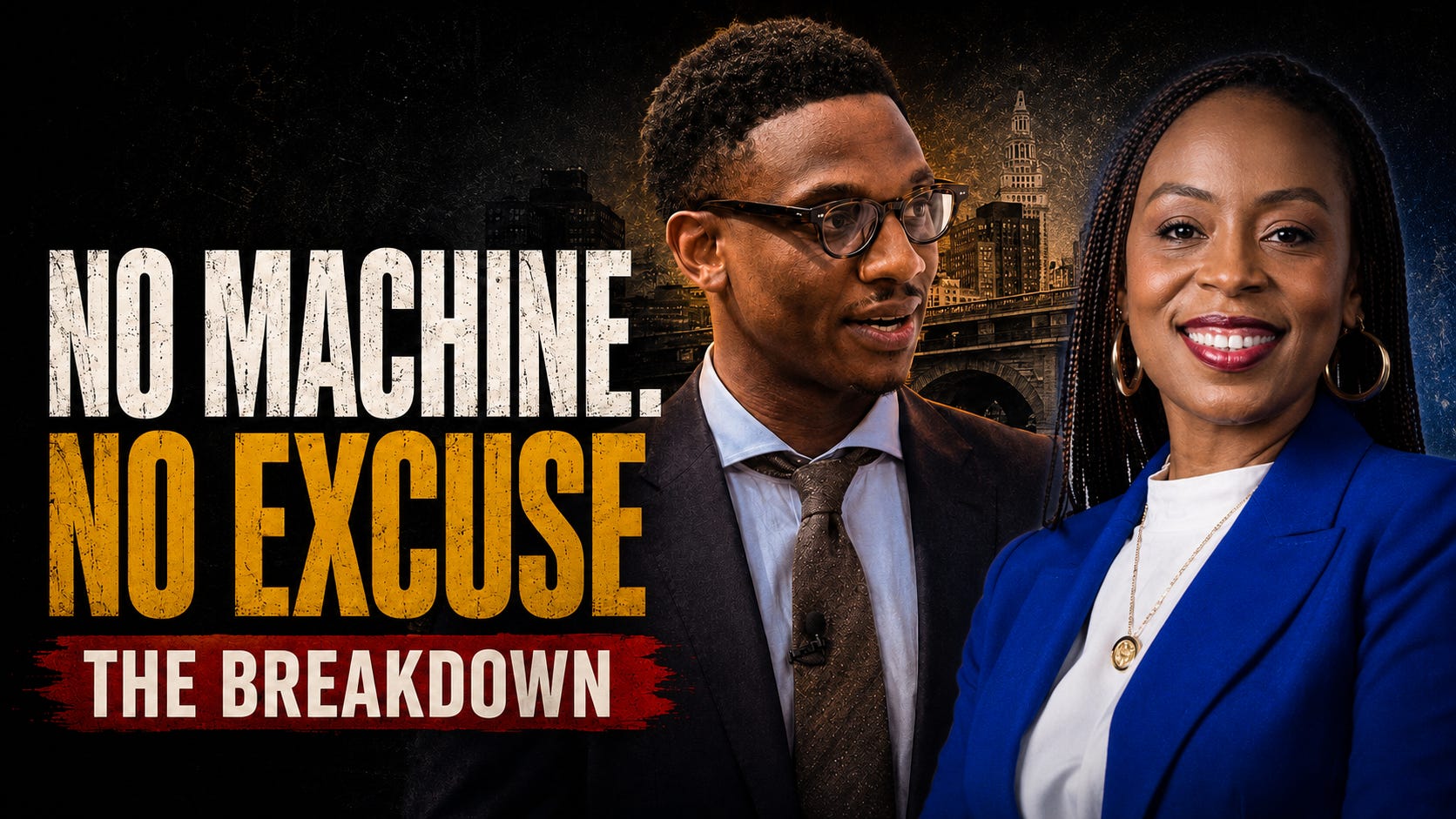
Shontel Brown isn’t a question mark anymore. Three elections in, sitting in that seat like she plans to keep it — and she’s not alone. Justin Bibb runs the mayor’s office. City Council is the youngest it’s been in a generation.
This isn’t just Cleveland, either — across the Eleventh District and the eastern suburbs, a whole new slate of Black and white officials is coming up where our people live. This district is its first fully post-machine generation of Black leadership.
Neither got handed anything — no closed-door meeting, no godfather on the phone. They won it the hard way, in a political culture that rewards loud over careful. Shontel ran through that twice; some say it helped elect Bibb, too. Neither built that water, and nobody knows how to reach a generation more comfortable posting than showing up. That’s the job now.
Shontel’s been out there — meetings, engagement, showing up like a role model should. That’s real. One push specific to Black men, not just young ones — I’m one, so I say this from inside it. We have to show people that power resides in our hands, because losing on every front, even from inside leadership, convinces somebody that none of it works.
Bibb’s a role model for young men, but for men, period — older men stopped voting not from apathy, but because nobody gave them a reason to believe it still mattered. Big shoes to fill.
Heavy is the crown. Real leadership isn’t a press conference — it’s rolling up your sleeves until people feel like somebody’s fighting for them. Carl Stokes carried that weight, and so did Michael White and Frank Jackson. It’s a seriousness you grow into, not handed to you — and it’s Bibb’s turn now to build that thing between men.
None of this runs one way. Bibb needs men willing to follow — leadership nobody follows is just a title. Same with Shontel: one person can’t hold up a roof and call it a system. This was never only a men’s project — rebuilding this takes women too; we all know that women are much better organized.
I was in the room in 2020 when Fudge and I tried to organize local elected officials, just to keep some order. Even that isn’t built out for what’s needed now.
This seat mattered to Louis Stokes and Carl Stokes. It mattered to Stephanie Tubbs Jones and Marcia Fudge. It has to matter the same way now — to Shontel, to Bibb, to everybody named here — or everything argued for stays exactly where it is: waiting.
This isn’t a call to vote in one election. It’s a wake-up call — figure out what it takes to get out of a situation we helped build, and set a blueprint the next generation can use, here and across the district. Two years to the next presidential election. This year’s a real chance to win.
If you want to read every week — subscribe. → kenndowell.substack.com