

Supreme Court vs Voting Rights: The Case That Could Set Us Back 60 Years
There’s a thing that happens in Black communities when the hit is too big to process.
We go quiet.
Not because we don’t care. But when the wound is deep enough, the brain protects itself. It normalizes. It reroutes. The Cavaliers are playing. The cookout is on Sunday. The kids need shoes. And somewhere in Washington, six Supreme Court justices — one of them a Black man — just finished amputating two of our legs.
That’s what happened in Louisiana. And most people kept walking like nothing was wrong.
What Actually Happened — And Why It’s Worse Than You Think
The Supreme Court of the United States just ruled against a second minority-majority congressional district in Louisiana.
Let’s unpack that plainly, because the language can make your eyes glaze over — and that’s exactly how they want it.
Minority-majority districts were created to ensure that Black people, concentrated in specific geographic areas, could actually elect someone who represents them in Congress. Not a representative who waves at them. Not one who shows up in October before an election. A representative they put there.
The Louisiana case challenged the creation of a second such district. It went to the Supreme Court. And five Republican-appointed justices — joined by Clarence Thomas — ruled that drawing districts to protect Black representation violates the Constitution.
Let that sit for a moment.
The tool created to protect voting rights under the 15th Amendment — a constitutional amendment — was ruled unconstitutional. By the Supreme Court. That protects the Constitution.
As Retired Judge Michael Nelson put it on Tuesday’s show: “Something created and amended in the constitution — this Supreme Court decided — violated the constitution. It makes no sense.”
It doesn’t make sense. It’s not supposed to. It’s supposed to confuse you long enough for it to become permanent.
This One Is Ours
When we talk about immigration policy, we’re talking about a wide net of people.
When we talk about healthcare, we’re talking about a wide net of people.
When we talk about food assistance, we’re talking about a wide net of people.
This one? This one is Black people. Full stop.
The attack on minority-majority congressional districts is a direct, targeted, surgical removal of Black political representation. There is no other community this hits first, hardest, and most directly. No one hijacked this issue and added their coalition to it. This was aimed at us.
And we went to the Cavaliers game.
The Quiet That Should Scare You
Here’s the question that hung over Tuesday’s show like smoke in a closed room:
Where is the outrage?
Not the social media kind. Not the think piece kind. The kind that puts people in the streets. The kind that floods the switchboard. The kind that makes an organization actually do something besides call a meeting about having a meeting.
Judge Nelson called it exactly right: “Preachers should have been preaching this on Sunday. Any social group — the Divine Nine — this should have been your discussion.”
It wasn’t.
And Dr. Heather Burton put her finger on part of why: people don’t know what they don’t have, if they never had to fight for it.
She’s right. There is a generation — and not just a young one — that inherited the victories of the Civil Rights Movement without inheriting the memory of what it cost to win them. Integration wasn’t a gift. It was a bloody, decades-long war. The 15th Amendment wasn’t protection — it was a promise that took a hundred years and another Act of Congress to begin enforcing.
Now that enforcement is being reversed.
And the silence tells you how far we’ve drifted from knowing what we’re actually holding.
Going Back to Before Reconstruction. Not During. Before.
Judge Nelson didn’t pull his punches on the history.
We went from legal segregation — where it was lawful to tell Black people they couldn’t enter a store, couldn’t live on certain blocks, couldn’t marry certain people — to hard-fought legal equality. Brown v. Board. The Civil Rights Act. The Voting Rights Act. Fair housing. Open accommodations. The right to vote freely.
Those weren’t given. They were extracted from a system that didn’t want to release them.
Dr. Burton reminded the audience of something that should stop everyone cold: HBCUs weren’t a great idea. They were a survival response. Black people didn’t build their own institutions because of pride. They built them because they were legally barred from white ones. The pride came later. The necessity came first.
Deed covenants in Shaker Heights. Denied loans to Black business owners with perfect financials. Redlining that drew the map of where Black wealth could and could not exist — and then called it the market.
That’s the world these rulings are pulling us back toward. Not metaphorically. Legally.
Clarence Thomas and the Weight of That Seat
It needs to be said directly.
Clarence Thomas sits in the highest judicial position in this country. He is a permanent member of the Supreme Court. He cannot be voted out. He serves until death or his own decision.
And he voted to gut the Voting Rights Act protections designed specifically for people who look like him.
This is not a political commentary. It is a structural reality. When one Black man in a permanent seat repeatedly casts votes against the legal protections of the Black community, the community absorbs the consequences whether it names the source or not.
Judge Nelson didn’t call for anger. He called for clarity. Know what it is. Name what it is. And understand why it matters.
The Numbers on the Ground — Cleveland, Election Day
While the Supreme Court ruling shaped the conversation Tuesday, Kenn Dowell was also tracking real-time voter turnout numbers across the city. And the picture was complicated.
Early vote in the city of Cleveland was down nearly 2,900 votes compared to the same point in the 2022 midterms. Ward 1 was at 10% turnout mid-day. Ward 2 at 6%. Ward 3 at 7%.
But the West Side was moving. Ward 15, the Far West Side, was at 12%. Lakewood at 15%. Shaker Heights at 14%. Cleveland Heights at 14%.
The pattern that every strategist in Cleveland already knows was confirming itself again in real time: the vote exists. It just doesn’t always show up where the power needs it most.
Dr. Burton put the challenge plainly: When do we get to 50%? When does more than 20% of our community care about what’s happening in the communities we live in?
That’s not a rhetorical question. It’s a benchmark. And we’re nowhere close.
Freedom Summer Needs to Start Tonight
Judge Nelson made the call. Call it a demand.
After 7:30 PM Tuesday — after the polls closed — the organizing season needs to begin. Not another convening to plan the convening. Not a task force to assess the task force.
People going into communities — including small towns along the Ohio River, including Republican-held districts where Black, brown, and working-class voters are being systematically underserved by the representatives they keep sending back — and having honest conversations.
Not to embarrass. To inform.
Your representative voted against your healthcare. Against your schools. Against your roads. They’ve had a supermajority in Ohio since 2011. Ohio is 31st in education. They’ve been in charge the whole time.
The lie that someone else is responsible for what they’ve been running is the engine of their power. Exposing it is the work.
We Made for This
This is what came through most clearly on Tuesday, in the quiet that settled between the numbers and the history and the weight of everything being said.
We are not surprised. We have been here before. We have been here before when it was worse.
Our institutions — the ones built out of necessity, the ones that survived legal segregation and deed covenants and poll taxes and marbles in a jar and everything else — those institutions carry DNA that knows how to fight from a deficit.
What we cannot afford is to treat this moment like a news cycle. Because it is not.
The rights being dismantled right now took 100 years to build. They can be rolled back in a single term. And the window to stop it closes every time a Black voter sits out an election, every time a meeting ends without a plan, every time outrage expires before it becomes action.
Wake up. Not metaphorically.
Wake up.
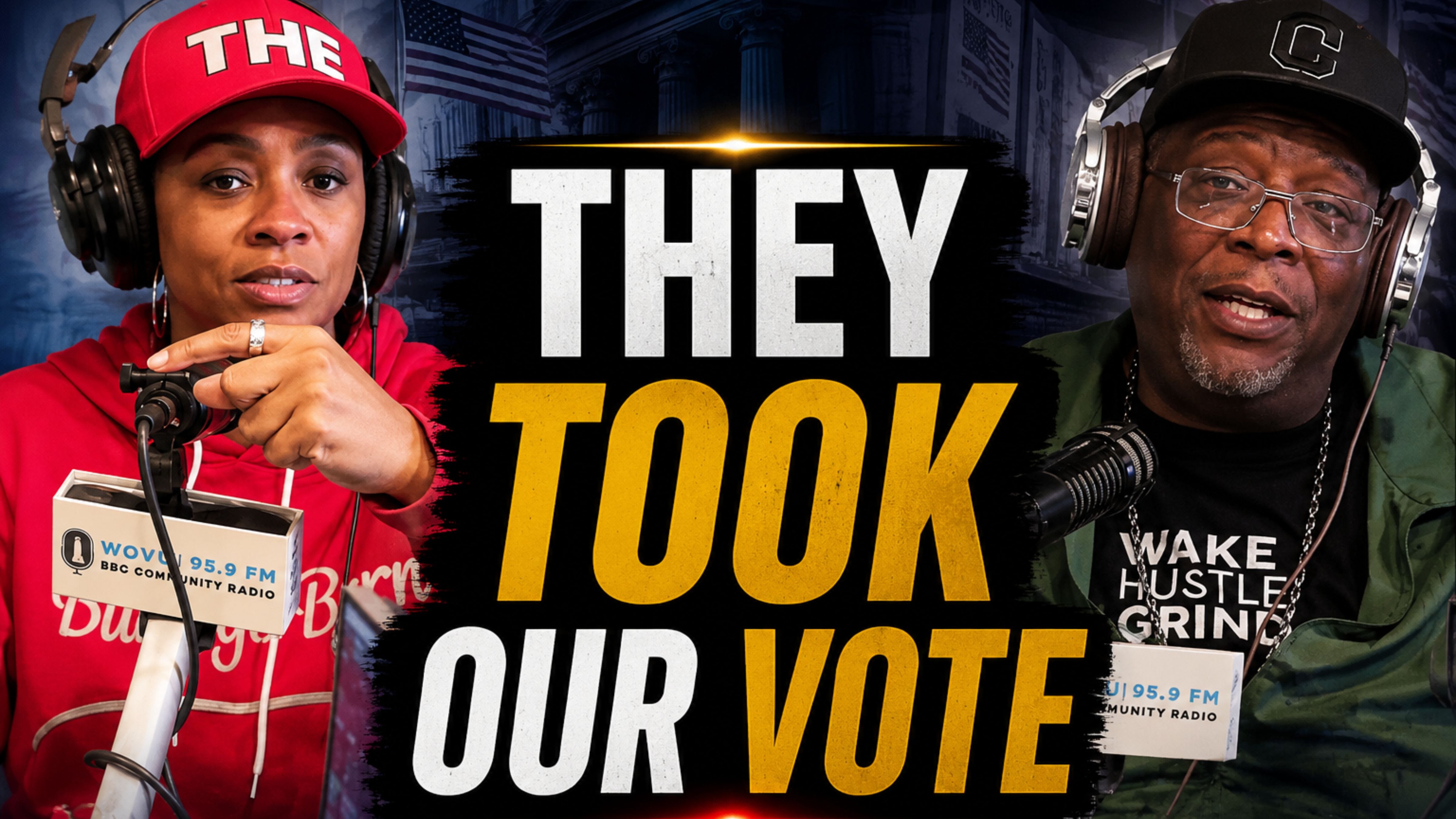
Strategic Moves with Kenn Dowell airs every Tuesday on WOVU 95.9 FM in Cleveland. Stream live at wovu.org. Follow on YouTube, Facebook, Instagram, LinkedIn, and Twitch.
Subscribe to this newsletter for weekly civic intelligence from inside the game.
Tags: Voting Rights Act | Black Politics | Supreme Court | Cleveland | Black Power | Civic Engagement | Strategic Moves | Election Day | Clarence Thomas | Freedom Summer