


Stop waiting on campaigns to save what we should already be building. The infrastructure of Black political power does not get built in October. It gets built now — by us, for us, before anybody with a check shows up asking for our votes.
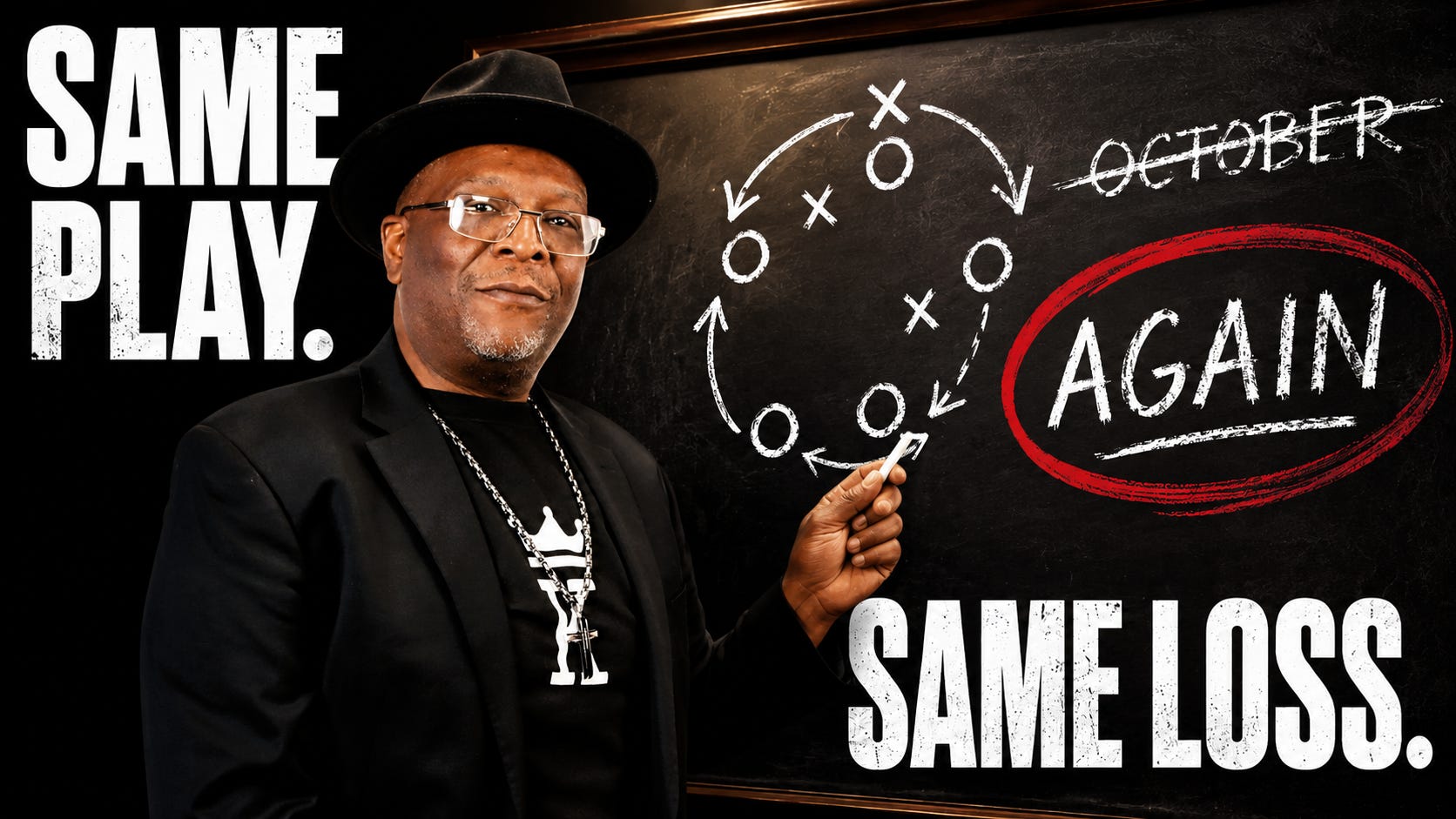
This is Kenn Dowell. Cleveland born. Glenville raised. And never afraid to say what needs to be said.
We are in July. November is four months away. And I have been in enough of these cycles to know exactly what is about to happen — because it happens every single time.
The campaigns are going to wait. They are going to read their polls, feel comfortable about where Black voters are leaning, and plan a 90-day sprint starting in August.
They are going to knock on doors for six weeks, run TV ads nobody in Glenville is watching, and then sit in a room in December asking each other what went wrong.
I am going to tell you what went wrong. Right now. In July. While there is still time to do something about it.
The Number That Should Embarrass Everyone
Let me start right here in Cuyahoga County. Because the numbers from our own May 5th primary tell you everything you need to know about the size of the problem.
Cuyahoga County has 862,843 registered voters. In the May primary, 672,791 of them did not cast a ballot. That is not a typo. Nearly 78 percent of registered voters in this county sat out an election that determines who controls the ballot, the bench, and the budget.
Now zoom out to the general election picture. In the 2022 midterm, the City of Cleveland recorded only 29% voter turnout. Countywide it was 44%. Those numbers are not the floor. They have become the expectation. And campaigns have built their entire strategy around managing that expectation instead of changing it.
Now look at what AARP’s June 2026 survey shows. Sherrod Brown leads Jon Husted 48% to 45% — within the margin of error. Amy Acton leads Vivek Ramaswamy 47% to 44% — same story. Both races are coinflips. Both will be decided by who turns out.
Black voters back Brown by 65 points. Black voters back Acton by 55 points. The support is overwhelming. It has always been there. The question is whether the people who hold that support show up to express it.
In a county where 672,791 registered voters stayed home in the primary, that is not a small question. That is the whole game.
I have worked campaigns at the federal, state, and local level for over 20 years. And I can tell you this conversation — early investment in Black communities, real ground infrastructure before October, treating Black voters as a constituency worth organizing rather than a number worth assuming — happens every single cycle. Every cycle the campaigns nod.
Every cycle they run the same play. Every cycle Black turnout underperforms what it could be. And every cycle the margin is close enough that you can draw a straight line between what didn’t get invested in June and what didn’t show up in November.
We are in July. That line is already being drawn.
There’s a Third Force Working Against All of This
Before I get to our own accountability — and I’m getting there — I have to name what happened on June 11th.
Hundreds of FBI agents fanned out across Ohio. They raided the Cleveland offices of the Ohio Organizing Collaborative — a nonpartisan voter registration organization that helped register approximately 160,000 Ohioans in 2024.
Agents showed up at staff members’ homes. They followed people in their cars. They seized computers and phones. They contacted more than 100 current and former affiliates across the state.
Not one person has been charged with a crime.
Congresswoman Shontel Brown said it plainly: “Voter registration is not voter fraud. Urban communities voting is not voter fraud. Black Americans voting is not voter fraud.”
She is right. And I’ll add what she didn’t say. What that raid did is send a message to every person doing ground-level civic work in Ohio. The message is: this work is dangerous. You could be next. Organizers pull back.
Volunteers get nervous. Organizations that were already underfunded now have to think about whether registering voters makes them a federal target.
That is what intimidation is designed to produce. The response is not to go quieter. It is to go bigger.
Now Let Me Talk to Us
The campaigns’ failure does not excuse what I’m seeing on our side.
We have organizations. We have elected officials. We have civic groups and people who carry the title of leader. And right now, in July, too many of them are waiting. Waiting on a campaign to fund them. Waiting for someone else to convene the room.
That is not leadership. That is dependency. And we built it ourselves.
Here is the harder truth. We vote in low numbers. We know we vote in low numbers. And then we are surprised when candidates treat us like a constituency to manage rather than a force to reckon with.
When you show up in strength — when your turnout is organized, documented, and consistent — you are not a community asking for investment. You are a community negotiating from power.
The resources from campaigns should be an offset. They should supplement infrastructure that already exists — not build it from scratch in October. Voting is not a campaign activity. It is a civic practice. And until we fund and run our own infrastructure year-round, we will keep having this same conversation.
The Asset Nobody Is Using
Let me talk about the biggest missed opportunity of this entire cycle.
Her name is Annette Blackwell. Mayor of Maple Heights. African American woman. Running for Ohio State Auditor. And the campaigns — Brown, Acton, the coordinated Democratic campaign — are not using her the way they should.
First, let me tell you who she is running against. Frank LaRose signed Senate Bill 293 into law — a monthly voter purge system removing voters from the rolls without meaningful notice. The ACLU called it discriminatory and unlawful.
Federal lawsuits argue it violates the National Voter Registration Act and the 14th Amendment. The man purging Black voters off the rolls is now asking Ohio to send him to the U.S. Senate. The woman running to hold the office he is leaving is one of our own.
That contrast is not a talking point. That is a reason to show up.
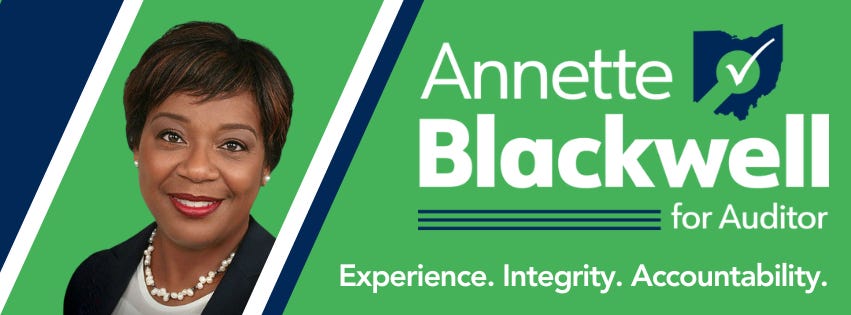
In 2016, Blackwell became the first woman and the first African American elected mayor of Maple Heights — walking into a city in state-declared fiscal emergency with a $2.7 million deficit. She fixed it in four years.
By 2021, Maple Heights was earning the Ohio Auditor’s Clean Audit Award — every year through 2023. She is not a symbolic candidate. She fixed a broken city. People across the inner-ring suburbs know exactly who she is and what she did.
Freedom Summer 1964 was not a celebration. It was a confrontation. Organizers flooded Mississippi to register Black voters being systematically blocked from the ballot. They were beaten for it. Some were killed for it. They did it anyway — because they understood the vote is not just a right. It is power. And power has to be fought for or it gets taken.
That is not history. That is right now. Ohio passed a voter purge law. The Supreme Court gutted the Voting Rights Act. The FBI raided a voter registration organization in Cleveland. Different tactics. Same objective.
That is why we are calling this Freedom Summer 2026. The work started in 1964 is unfinished. Finishing it means showing up this November organized, fearless, and too large to stop.
Annette Blackwell is part of that answer. A coordinated ground operation centered on her presence in Black communities across Cuyahoga, Franklin, Hamilton, and Montgomery counties is capable of producing a 5 to 7 point turnout increase. She is not the only variable. But she may be the most underutilized one.
She is one election away from becoming the first Black woman elected Ohio State Auditor in state history. She is running against the man who tried to purge our voters. She gives every low-propensity Black voter a second reason to show up that feels personal.
In a race this close, leaving that on the table is not a small mistake.
The Clock Is Running
In May, 672,791 registered Cuyahoga County voters did not cast a ballot in the primary. Not statewide. Right here. Our county. Our neighbors. Our people.
Those are not unreachable voters. They are under-invested in. At 10% activation that is 67,000 new votes — enough to decide the Ohio Supreme Court, flip a Statehouse seat, change a county prosecutor. At 25% activation Cuyahoga becomes the engine that decides every Ohio statewide race.
The math is sitting right there. It will still be sitting there in September when everyone finally decides it’s time to move. The question is whether we keep letting the calendar run out before we act like we mean it.
I mean it now. In July.
Subscribe to this Substack if you want to follow what happens next. The strategy conversation continues here.
— Kenn Dowell, Strategic Moves Media Network
Thank You!! It's unfortunate that the same People who didn't vote in the 2022 and 2024 Elections made excuses as to why they didn't are the most vocal Complainers online.
Good read and I couldn't agree more! You cannot wait till the last minute and then wonder why you're coming up short. And furthermore, it's not our fault when you do not invest in us.