


They’re Watching You. The Question Is Who Gave Them Permission.
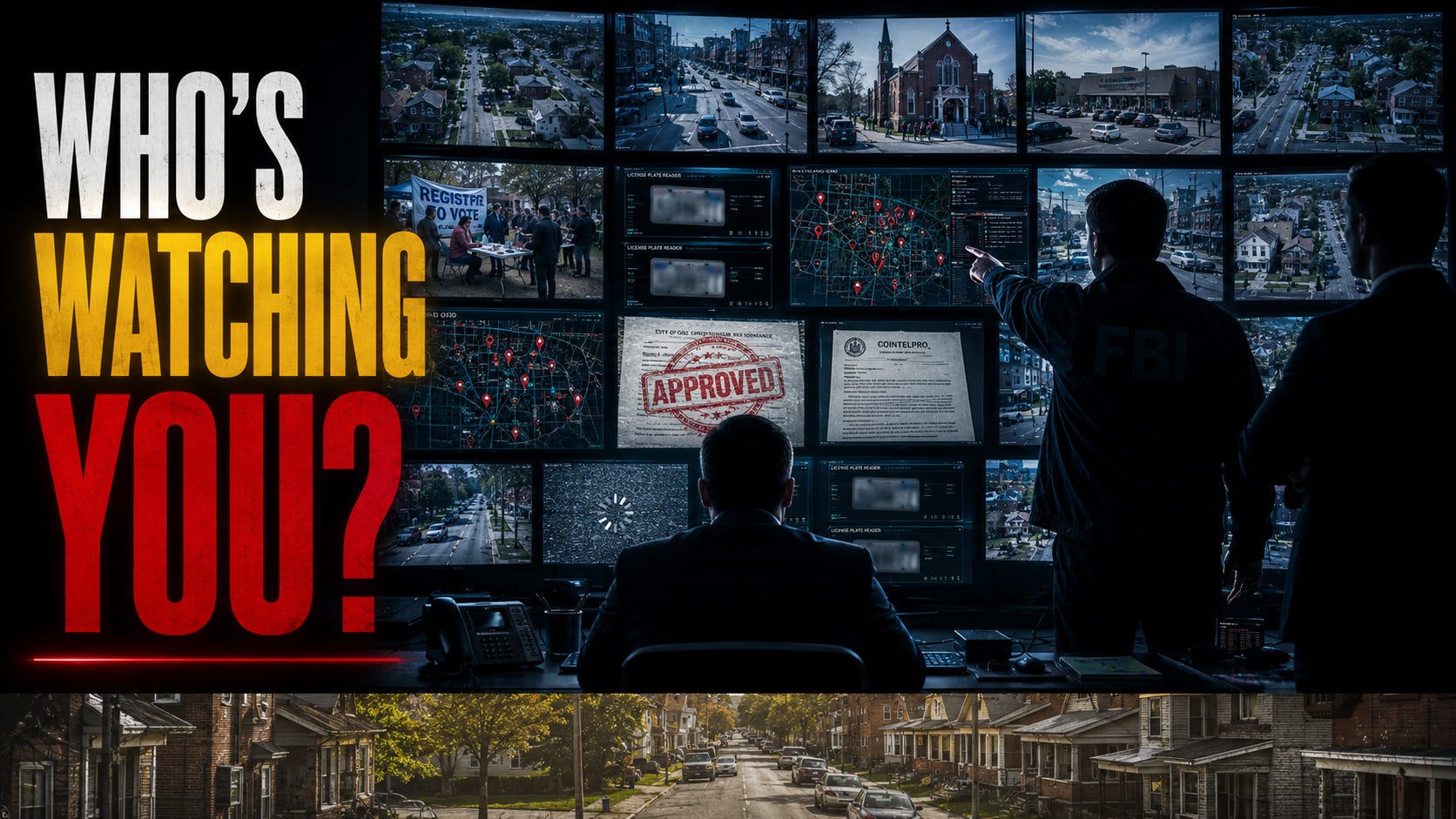
Two Rooms. One City. The Same Fight.
Tuesday started with one room and ended in another — and I don’t think the people in either one realized they were in the same conversation.
The first room was City Hall. Cleveland’s Public Safety Committee debated whether to renew the city’s contract with Flock Safety — the company running 100 automated license plate reader cameras across Cleveland. Those cameras capture every vehicle that passes. The data is stored and searchable by law enforcement agencies nationwide, without a warrant. Cleveland police run an average of 12,000 Flock searches a month.
Three of the four council members who voted opposed extending the contract. Councilmember Kevin Conwell put it plainly: “You didn’t show us any numbers. How did it help us, in how many court cases?” Councilmember Stephanie Howse-Jones, whose ward has more surveillance cameras than any other in the city, said the city has “totally dropped the ball on true investments for violence prevention.”
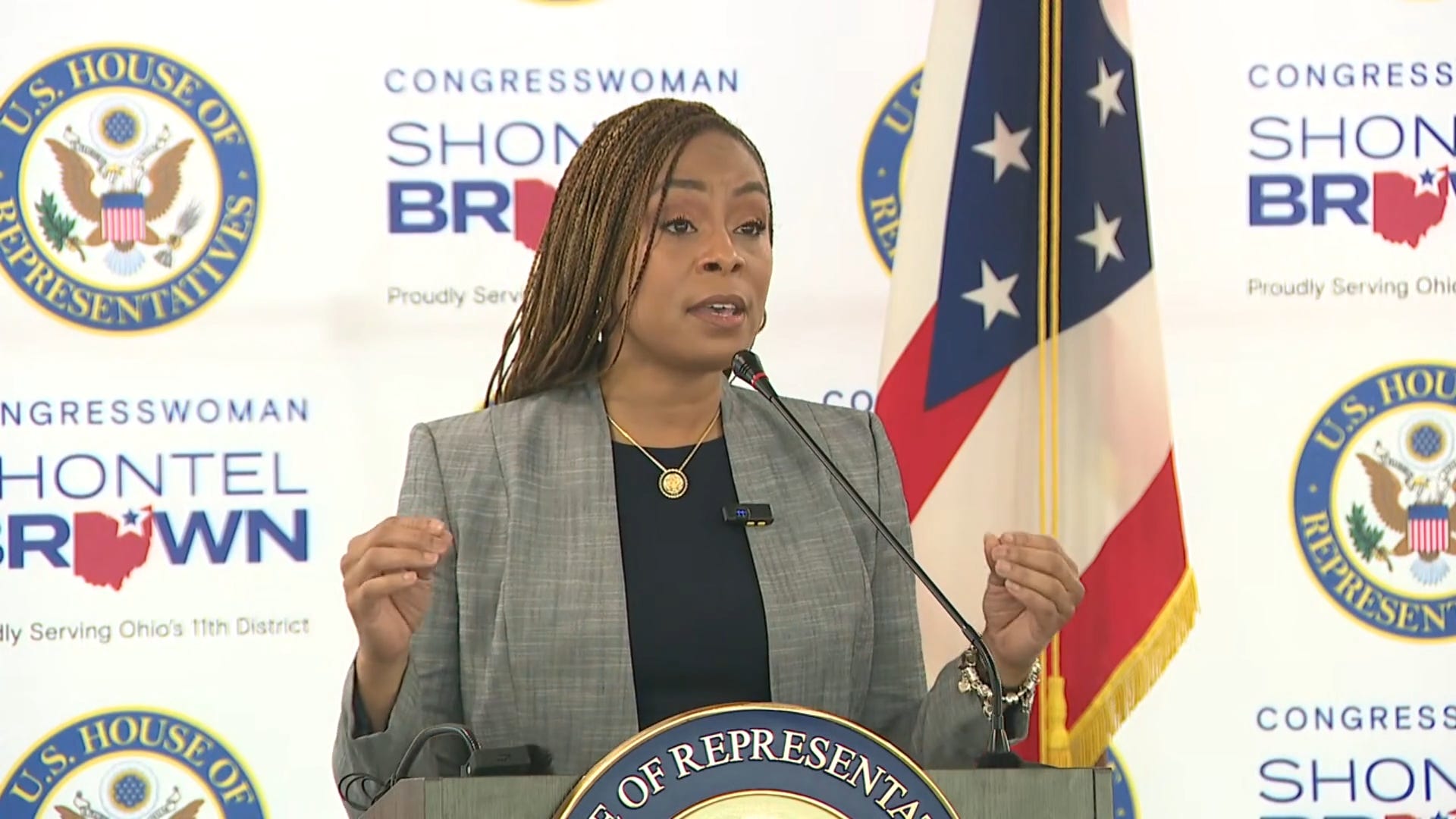
A few miles away, Congresswoman Shontel Brown stood at the Cuyahoga County Board of Elections with elected officials, faith leaders, and civic organizations. She was responding to something that shook this community last week. On June 11th, hundreds of FBI agents fanned out across Ohio — raiding the Cleveland offices of the Ohio Organizing Collaborative, following staff in their cars, showing up at their homes, attempting to enter. The OOC registered approximately 160,000 Ohioans to vote in 2024. As of today, not one person has been charged with a crime.
Brown said what needed to be said: “We were the last to win the right to vote and the right to representation — and now we’re the first to have agents knocking on our door. It’s a message, and it’s not subtle.”
She is right. I am with her on that completely.
After sitting with both events, something became clear to me that I think belongs in this conversation.
These are not two separate stories. They are the same principle playing out at two different levels of government — one federal, one local — on the same day, in the same city.
What the FBI did to the Ohio Organizing Collaborative — deploying hundreds of agents against a voter registration organization, following people to their homes, and doing all of it without a single charge being filed — that is government overreach. Most people who watched Congresswoman Brown’s press conference can see that clearly.
But now stay with me, because here is where it gets closer to home.
That same week, in that Safety Committee hearing at City Hall, council members were questioning a surveillance system their own body approved in 2023. When Flock came to Cleveland, the ordinance that authorized it never once used the word “surveillance.”
It was written up as an information technology upgrade. That is what council voted on — and that is what they said yes to. Meanwhile, residents submitted a letter with 275 signatures warning about exactly the kind of risks now being debated. They received one response: a confirmation that the letter had been read by a secretary.
So here is what I came away with. The concern is not just about the FBI. And it is not just about Flock. It is about who gets to authorize power over a community — and whether the people in that community ever get a real say before it is already done.
The Cameras, My Position, and the Real Problem
Let me be straight. Flock cameras have demonstrated real value — locating missing children, tracking murder suspects, supporting active prosecutions. I am not arguing for pulling them out.
But the national data is also clear: these cameras are disproportionately concentrated in Black and low-income neighborhoods. The system has been accessed by federal immigration enforcement in cities that never authorized it. Congress has demanded the FTC investigate Flock after stolen police credentials exposed the entire network to hackers.
The answer is not “Flock No.” The answer is a contract with teeth.
Other cities have already shown how. Washington State passed legislation in March 2026 restricting data retention, limiting who can access the system, and requiring attorney general oversight. Cities from Austin to Evanston have written enforceable data-use restrictions directly into their contracts — no selling data, no sharing with immigration enforcement, mandatory performance reporting to the full council twice a year.
Cleveland can do the same. The cameras can stay. The blank check has to go.
And here is the deeper issue that came up — and it is the most honest thing said in either room this week. Someone raised the point that they trust Mayor Bibb with this data. But what about the next mayor? What about the administration after that?
That question is the whole argument. Surveillance infrastructure does not belong to the person who built it. You approve it under someone you trust, and you hand it — with all its power and all its reach — to whoever comes next. That is not a Bibb problem. That is a structural problem. And it is exactly why enforceable guardrails written into the contract matter more than the character of the person currently in charge.
The same logic applies to what happened with the OOC. The FBI’s power to deploy hundreds of agents across a state to investigate a voter registration group did not appear overnight. It was built over years, handed from one administration to the next, and is now being used in ways that should concern every American regardless of party.
The Thread That Connects Both Rooms
Congresswoman Brown is right to demand that Kash Patel explain what warrant authorized the OOC raid, who ordered it, and why this operation targeted a group that committed no crime.
And we are right to demand that Cleveland City Council — if they extend any surveillance contract going forward — do it in public, in plain language, with limits that are written down, enforceable, and not dependent on trusting whoever happens to be in office at the time.
Accountability does not get to be selective. It does not apply only when the overreach is federal. Government overreach sometimes starts in Washington. And sometimes it starts right here — in an ordinance that calls surveillance an IT upgrade and hopes nobody reads the fine print.
The November election is 139 days away. Ohio’s voter registration deadline is October 5th. Register. Vote. And hold every level of government to the same standard.
— Kenn Dowell, Strategic Moves Media Network