

"Same contract. Same company. Same risks. One city governed. One city is still trying to figure out what it voted for."
— Kenn Dowell, Strategic Moves Media Network
This is Kenn Dowell. Cleveland born. Glenville raised. And never afraid to say what needs to be said.
Last Week. Same Issue. Two Cities. Two Completely Different Responses.
A lot happened last week in Northeast Ohio. But two things stood out to me — and I don’t think enough people have put them side by side yet.
On Wednesday, June 17th, Cleveland City Council’s Public Safety Committee sat through nearly two hours of debate and voted 3 to 1 against renewing the city’s contract with Flock Safety. The contract expires June 29th. The legislation now heads to another council committee, but no date has been set for a hearing. The clock is running.
Two days later, on Friday, June 19th, Shaker Heights Mayor David Weiss quietly did something different. He signed a new Flock Safety contract. No drama. No three-hour hearing. No unresolved questions hanging in the air.
Same company. Same technology. Same issues about data sharing, federal access, and who gets to see what your vehicle is doing and where it’s going. Two cities. One week. Two completely different responses.
And the difference between those two responses tells you everything you need to know about the state of governance in this region right now. It tells you why families pack up and leave cities like Cleveland. Not because they stopped loving it.
But because at some point they get tired of watching a smaller community down the road solve in two days what their city couldn’t figure out in three years. People don’t leave Cleveland for the suburbs because the grass is greener. They leave because the government actually works.
Same Contract. Two Different Cities. One Answer.
Let me be clear about what I am and am not saying.
I am not comparing Cleveland to Shaker Heights as cities. That is not a fair comparison and I am not going to make it. Different size. Different population. Different resources. Different challenges entirely.
But here is what is the same.
Both cities signed a contract with Flock Safety. Same company. Same technology. Same national network. Same questions about who can access the data, whether federal agencies can pull it, whether ICE can use it, whether residents are protected.
That contract is the apples to apples.
Shaker looked at that contract and found the problems. Mayor Weiss negotiated new language, rewrote the terms, locked out federal agencies, cut off ICE-connected jurisdictions, and contacted all 434 agencies with access and told them to comply or get removed. Then he signed it.
Cleveland looked at the same contract and three years later showed up to a renewal hearing with no data, no outcomes, no case numbers, and no answer to the most basic question a council member could ask.
Same contract. Same company. Same risks. One city governed. One city is still trying to figure out what it voted for. That is not a size problem. That is not a resource problem. That is a governance problem.
What Should Have Been There From The Start.
Here is what this hearing actually revealed — and it is bigger than whether you trust this mayor or the next one. Three years. 100 cameras. 12,000 searches a month. And when council finally sat down and asked for the numbers — the administration didn’t have them.
Now I want to be fair to both sides. Maybe council asked for performance reports and the administration never delivered. Maybe nobody asked and nobody reported. We don’t know for certain. And that itself is part of the problem.
But here is what we do know. One of two things is true. Either council asked for this information and never got it — in which case the administration failed them. Or nobody asked — in which case both branches failed the public. Pick one. Neither answer is acceptable.
What is not debatable is this. A $250,000 a year surveillance contract should have had benchmarks written into it from day one. Annual reviews. Required reporting. Data on outcomes — delivered regularly, not on the eve of a deadline.
Here is what makes it worse. Cleveland operates under a federal consent decree requiring heightened accountability over its police department. The city has a Community Police Commission for exactly this kind of oversight. Both exist because Cleveland said it needed more transparency — not less. And yet this program ran for three years without a single performance report.
All of that oversight infrastructure. And nobody asked for a benchmark.
Shaker Heights didn’t make that mistake. Their new contract requires on demand audit logs, built-in performance reporting, and a termination clause if Flock violates any of it. That is what guardrails look like. Cleveland still needs to build them.
Two Branches. One Failure.
When Cleveland’s Public Safety Committee finally held a hearing, council members asked the Bibb administration a simple question. How many cases have these cameras actually helped solve? Three years of 12,000 searches a month — show us the results.
The administration had no answer.
Councilmember Kevin Conwell said it plain: “You didn’t show us any numbers. How did it help us, in how many court cases?”
Councilmember Stephanie Howse-Jones — whose ward carries more surveillance cameras than anywhere else in the city — said the city has “totally dropped the ball on true investments for violence prevention.”
And here is what makes it worse. Even Council Safety Committee Chair Michael Polensek — the one member who voted yes — said publicly that this could have been done months ago. “They knew when the contract was running out, and yet they didn’t take the appropriate action.”
Read that again. The administration’s own ally on council called them out.
The administration should have been reporting. Council should have been requiring it. The public deserved answers at every step — not just the last one. That is a failure of governance. Both branches own it.
What Cleveland Can Do Right Now.
Let me be straight about where I stand. The cameras have real value. Shaker’s own mayor credited Flock with helping solve homicides, sexual assaults, and aggravated robberies — and with recovering a missing juvenile. I am not arguing to pull them out.
But Shaker just proved what Cleveland keeps treating as impossible. You can keep the cameras and write a contract that actually protects your community. You can bar ICE access. You can require warrants. You can demand audit logs. You can build in a termination clause with a refund if Flock violates any of it.
The answer for Cleveland is not “Flock No.” The answer is a contract that looks like Shaker’s. Warrant requirement. No federal access. No ICE-connected jurisdictions. Full audit logs available to council on demand. Mandatory performance reporting — actual case numbers, actual outcomes — delivered to the full council on a regular basis.
And this time the administration brings the data before the vote. Not after someone asks. Not when the contract is already running. Before. That is not a radical ask. That is basic governance. And the city down the road just proved it can be done.
The Trust Argument Is the Problem.
Let me sit with something that came out of that hearing. Because it matters more than people realize. Someone stood up and said they trust Mayor Bibb with this data.
I want to take that seriously. Because I understand why someone would say it. Mayor Bibb is not the enemy in this conversation. But here is what that statement actually reveals — and why it should concern every single person in that room.
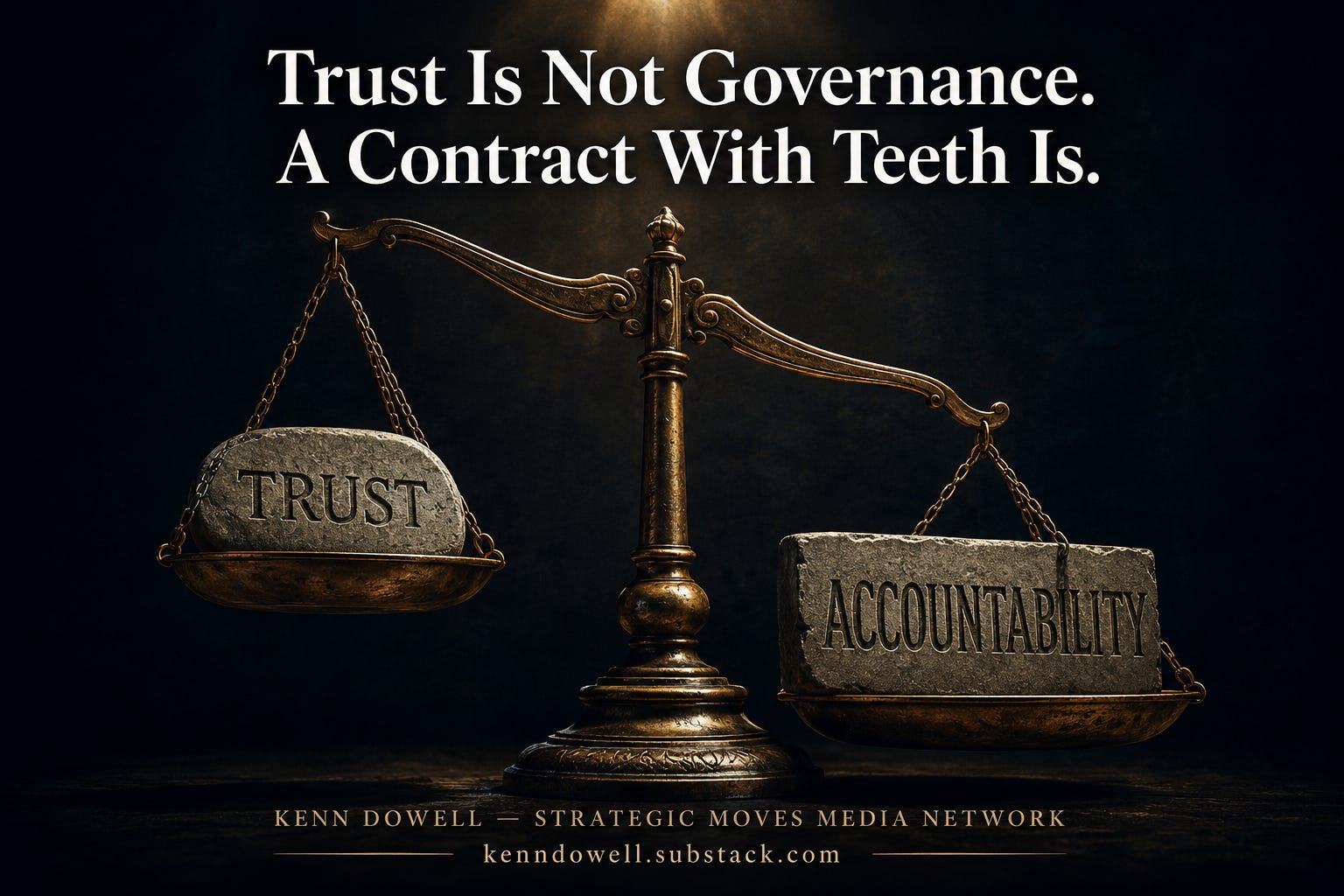
When your only protection is trusting the person currently in office — you have no protection at all.
Think about what that means in practice. There is no written limit in the current contract on who can access this data. No enforceable restriction on federal agencies. No requirement that Flock get a warrant before handing your information to law enforcement from another state. No audit log that council can pull up on demand. No termination clause if the rules get violated.
What exists right now is faith. Faith that the current mayor will do the right thing. Faith that the next one will too. Faith that somewhere down the line nobody in this chain decides to use 12,000 searches a month worth of data in a way this community never authorized.
That is not governance. That is hope.
And now layer in what we actually know about how this administration has handled this program. Three years of operation. 12,000 searches a month. And when council finally asked the most basic question — how many cases has this helped solve — the administration had no answer. Nothing. Empty.
This is the administration people are being asked to trust with surveillance data on every vehicle moving through this city.
Let that sit for a minute.
You cannot ask a community to extend blind trust to an administration that has not been transparent about the most basic facts of a program it has been running for three years. Trust is not declared. It is demonstrated. And on this issue the Bibb administration has not demonstrated it. That is not personal. That is the record.
Shaker Heights did not ask their residents to trust anybody. Mayor Weiss wrote the protections into the contract. Warrant required. Federal agencies locked out. ICE-connected jurisdictions removed. Audit logs available. Termination clause with a refund if Flock violates any of it.
Shaker’s residents do not have to trust the next mayor. The contract protects them regardless of who wins the next election. That is what accountability looks like. Not a promise. Not faith in one person. Written protection that survives the next administration and the one after that.
Cleveland can have the same thing. But it requires both branches of government to stop asking residents to trust them — and start giving residents something written down that they can hold them to.
The people of this city deserve more than trust. They deserve a contract with teeth.
— Kenn Dowell, Strategic Moves Media Network
Thank you for this insightful article. People need facts and figures…real qualified data in order to make an intelligent decision. Please keep sharing this type of journalism with us!! Thanks again!
Rev. Paul Hobson Sadler, Sr.
Thank you! I love the way you explained this issue because I think too many get lost when there isn’t adequate information available to make good decisions.
I’m a low drama kind of person and like things to be well thought out and work. City Council and the Mayor’s office, at least on this issue aren’t getting it done!