


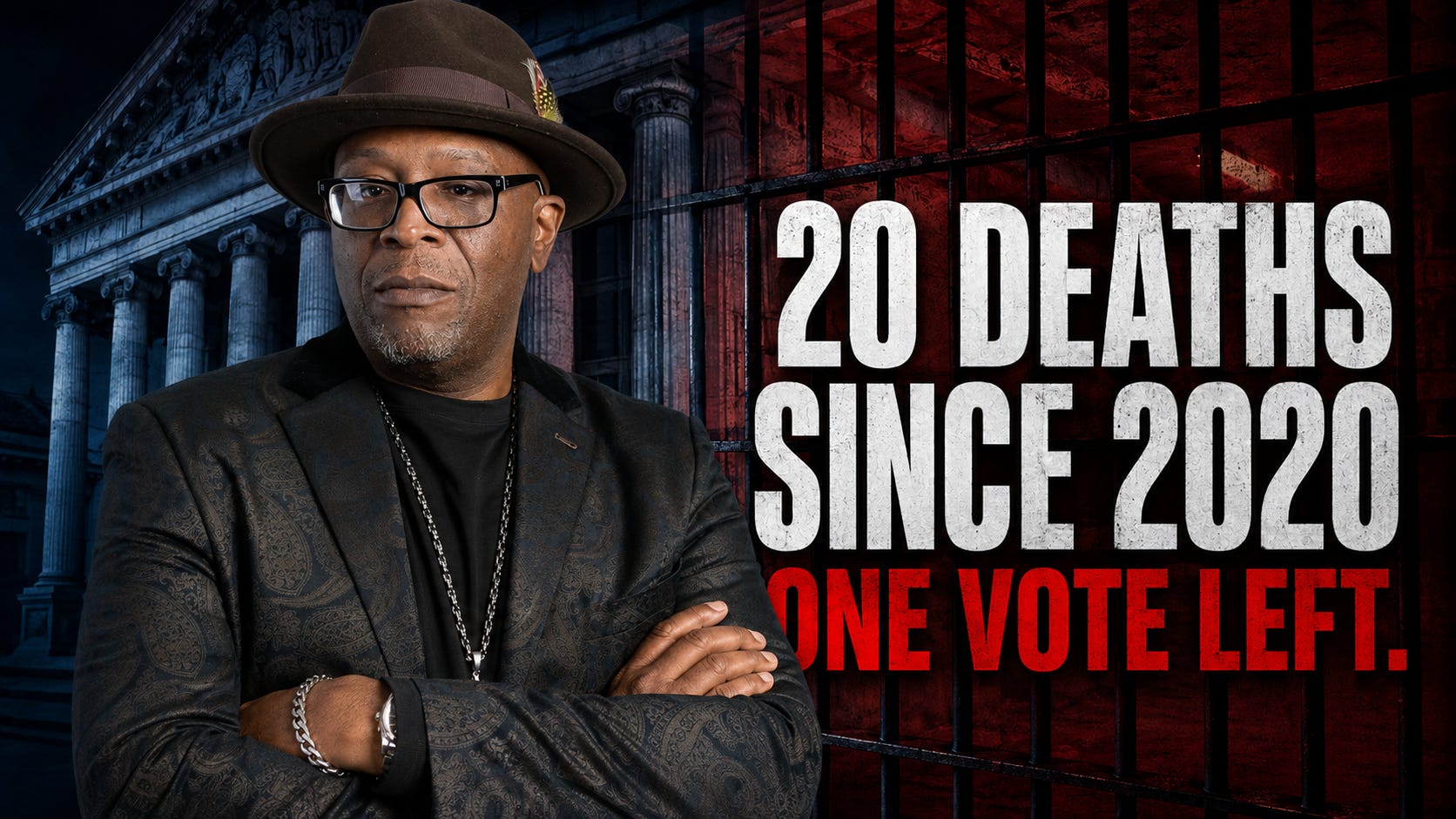
This is Kenn Dowell. Cleveland-born. Glenville-raised. And never afraid to say what needs to be said.
Before we get into it — thank you for reading Strategic Moves. If you’re new here, welcome. If you haven’t already, subscribe for free — it costs you nothing and makes sure you never miss a breakdown. And if this work is worth more to you than the free tier, a paid subscription helps keep this operation running and keeps the analysis coming every week, no matter who’s uncomfortable with it. Either way — glad you’re here. Let’s get into it.
Twenty Deaths Since 2020.
That’s not my number. That’s Cuyahoga County Prosecutor Michael O’Malley’s number, said out loud, on the record, to his own county council. Since 2020, we have lost twenty lives in the county jail. — Cuyahoga County Prosecutor Michael O’Malley, July 21, 2026
He said something else in that same breath: nine sheriffs in fewer than eighteen years. “Disgraceful,” he called it. That’s the system Chris Ronayne is fighting to protect. On July 21st, Ronayne asked his own council for more power over that sheriff’s office.
Not one council member voted yes. On that same night, Councilmember Martin Sweeney’s bill to let you elect your own sheriff again cleared committee with six or seven votes already locked in. It needs eight of eleven for final passage. Council votes again on August 4th. That’s thirteen days away, and this is one vote, maybe two, from becoming law.
He Asked for More Power. He Lost, Completely.
Ronayne wanted the authority to suspend, discipline, or fire the sheriff outright, a power voters took away from the executive back in 2019 after this county’s last sheriff scandal. He compared it publicly to how a governor oversees the Ohio Highway Patrol.
The roll call came back, and every single vote read into the record was no. Not one yes. The executive asked his own legislature for more control over one of the only offices in this county positioned to investigate him, and his own council told him no unanimously.
It’s not happening in a vacuum, either. Ronayne and Sheriff Harold Pretel, the man he personally appointed, are already fighting each other in court over control of the department’s own finances and staffing
Ask yourself why he wanted more unilateral power over that office at the exact moment his relationship with his own appointee was already broken.
Look at What It Actually Takes to Hold Either Job
The charter requires a sheriff to have at least five years of experience in law enforcement or corrections management, and a degree in the field. Within the first year, that sheriff also has to obtain a professional jail-operations certification. Miss it, and the office is automatically vacant. A hard floor written into law.
The charter requires the executive asking for power to fire that sheriff to be a registered voter for two years. That’s the entire qualification.
The man who wanted unilateral authority over the most professionally regulated law enforcement office in this county has to clear a lower bar to hold his own office than the sheriff has to clear just to keep his.
A sitting sheriff from Portage County told council the same thing to their faces that day: trying to run a sheriff’s office you’ve never worked inside is like a stranger walking into a kitchen and telling a five-star chef how to cook. Council’s rejection wasn’t a courtesy to Ronayne. It was common sense.
Say That Number Again
Twenty deaths since 2020. Nine sheriffs in fifteen years, six of those in just the last seven, according to Summit County Sheriff Kandy Fatheree, who put that stat on the record at the same meeting.
Not a rumor.Not an estimate. The county’s own prosecutor and a sitting sheriff from a neighboring county, both saying it to Cuyahoga County Council’s face. That’s not stability. That’s a revolving door with a body count, and it happened entirely under the system Ronayne is fighting to keep.

What Happens If You Fall One Vote Short
Ronayne argued for a third option that night: send the whole question to a charter review commission instead. Council President Dale Miller backed him. Here’s what that path actually costs. The commission isn’t picked until September 2027. It doesn’t report until June 2028. The earliest anything it recommends reaches your ballot is November 2028.
Councilmember Michael Gallagher, who chairs public safety, said what everyone in that room already knew: that commission is appointed by the executive. “That cake’s baked,” Gallagher said. Don’t expect a commission Ronayne helps staff to hand you a bigger say over the man who reports to him.
I’ve spent 25 years in the rooms where this county’s decisions get made, and I helped build the government we’re operating under right now, back when this county threw out three corrupt commissioners for the executive-and-council model we have today. We never finished the job on the sheriff. August 4th is our chance to finish it.
What We Actually Lost in 2009
In 2009, Cuyahoga County eliminated ten countywide elected offices in one motion. Three commissioners. An auditor, treasurer, recorder, clerk of courts, coroner, engineer, and sheriff. Every one of those offices ran its own countywide campaign. Every campaign built turnout.
We replaced ten countywide races with two: an executive and a prosecutor. Everything else became eleven district seats. A district race turns out one-eleventh of this county. Nobody replaced what we lost.
We didn’t just streamline government in 2009. We dismantled the machinery that used to turn people out, and never rebuilt it.
Putting the sheriff back on the ballot restores one of those ten. One more countywide race. One more reason to organize.
Why This Isn’t About One Man
I know Chris Ronayne. I’ve watched him govern. This isn’t a verdict on him personally. I sat down with him years ago, before he was ever elected, when he was still just a candidate, and even then he talked about being in charge of the sheriff’s department like it was already settled. This fight didn’t start on July 21st. It’s about the chair itself, and everyone who sits in it after him.
An appointed sheriff only works as well as the relationship the community happens to have with whoever holds that chair. Good relationship, maybe you get a phone call. No relationship, and you have no formal claim on that office at all. We cannot keep building our position in this county on the hope that the next executive decides to listen to us.
An elected sheriff takes that risk off the table. It stops depending on who we happen to have in that chair. It starts depending on us. That’s true no matter who wins the seat, or who’s sitting in the executive’s office next time. The point was never to win one friendly relationship. The point is to stop needing one.
I helped build the government that put that chair there. I don’t say that to brag on it. I say it because I know exactly which parts of the job we finished, and which parts we left half done. The sheriff’s office is unfinished business, plain and simple.
Where This Lands
Thirteen days. One vote, maybe two. That’s what stands between Cuyahoga County deciding this at the ballot box in November, or watching it disappear into a commission that won’t even be picked until 2027.
Call your council member before August 4th. Don’t ask them vaguely what they think about the sheriff’s office. Ask them the specific question that decides this: are they voting yes on final passage, yes or no? If they hedge, that’s your answer.
If they say yes, hold them to it publicly. Eleven council members, eight votes needed, one or two still in play. That’s a number small enough for organized people to move in thirteen days.
Then ask yourself the bigger question I keep coming back to: if this county still ran on ten countywide elected offices worth organizing around instead of two, do you think turnout and accountability would look different than it does right now?
Tell me what you think in the comments. I want to hear where you land.
If this is the kind of civic intelligence you need, subscribe at kenndowell.substack.com. The work continues there.