

This is Kenn Dowell. Cleveland born. Glenville raised. And never afraid to say what needs to be said.
I made you a promise at the end of Post 1. I told you the fire station conditions were coming. I told you the political maneuvering was coming. I told you the words one council member put on the public record were coming. I keep my promises. Let’s get into it.
Know The Players.
Every story has characters. This one is no different.
Ibrahim Shahida. The property owner. Cleveland resident. Business owner. He never went looking for this fight. This fight came looking for him.
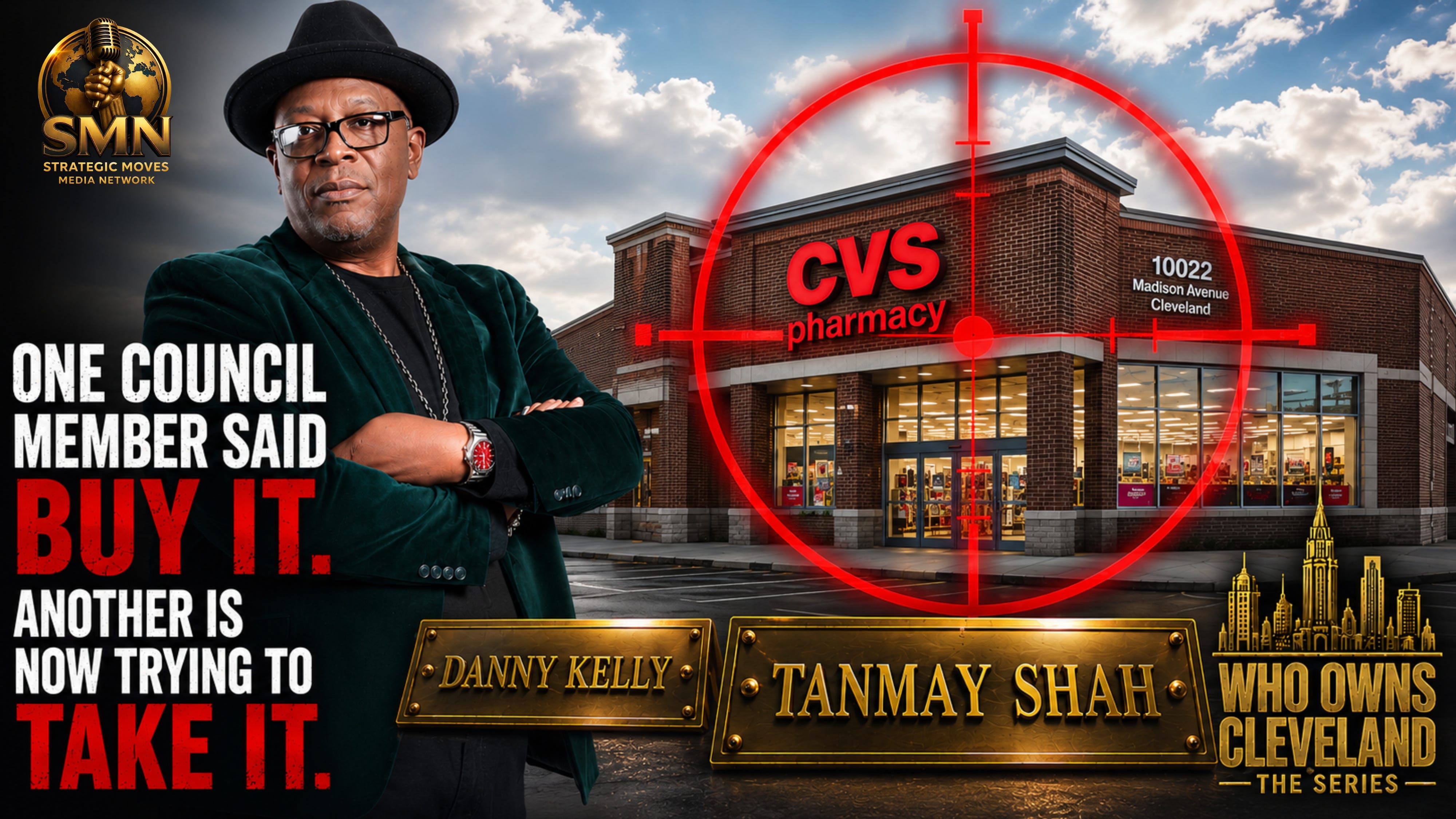
Former Councilman Danny Kelly. He represented Ward 12 before November 2025. The man who started all of this. He approached Shahida and asked him to buy that property. Gave his word. Then lost his seat and walked out the door — leaving Shahida holding close to a million dollars invested and a promise nobody could keep.
Councilman Tanmay Shah. The man who beat Danny Kelly in November 2025. Won by roughly 10 or 11 votes. One of the closest council races in the city. The gas station at 10022 Madison Avenue was a central issue in that campaign.
A wedge issue. Shah won. Kelly lost. And now Shah is one of the loudest voices pushing for eminent domain on the very property his predecessor recruited Shahida to buy.
You can draw your own conclusions about what that means.Councilwoman Nikki Hudson. Represents Ward 11 where Fire Station 23 currently sits. A passionate advocate for the firefighters. But the process she is supporting raises questions.
Councilman Michael D. Polensek. Chairman of the Public Safety Committee. On that council since 1984. Over forty years. He knows every rule. Every lever. Every back channel. He called the Safety Committee hearing that moved the eminent domain resolution forward. How he ran that hearing matters.
Councilman Joe Jones. The lone no vote. The one person who stood up and said out loud — this is not fair.
The Firefighters of Station 23. The real victims. Heroes working in a building that is making them sick. No political angle. Just men and women doing a dangerous job in conditions no one should have to work in.
The City of Cleveland Administration. Moving on two tracks at the same time — telling Shahida they want to talk while running the legal process to take his property whether he agrees or not. Now that you know who everybody is — let’s get into what happened.

It Started With A Promise.
Danny Kelly knew that vacant CVS building at 10022 Madison Avenue needed something done with it. So he went to Ibrahim Shahida and made him a pitch.
Buy the property. Put a gas station there. I will get it rezoned. I will handle it. Shahida did what most of us would do when an elected official gives you their word. He trusted it.
He paid $1.375million for that building. Then spent more on architectural work, planning, and property taxes, maintenance and appraisal along with site preparation. By the time it was all said and done he was over a 1.6million dollars tied up in that corner.
All based on Danny Kelly’s word.
But Kelly ran into trouble. Opposition built in the community. Tanmay Shah — running against Kelly for that seat — made the gas station a campaign issue. A wedge. Something that energized people on one side and hurt Kelly on the other.
November 2025 — Kelly lost. Shah won. By four or five votes. Danny Kelly walked out the door. Tanmay Shah walked in. And Ibrahim Shahida was left standing there with close to a million dollars invested — in a property he never would have bought if Danny Kelly had never asked him to.
Then Shah Tried Something Different.
To his credit — Shah did not immediately push for eminent domain when he took office.He sat down with Shahida. Suggested putting a grocery store at the property. Shahida was open to it.
But the grocery store operator Shah had in mind went out of business. That idea was dead. And the moment it died — the fire station idea came back. Hard and fast.
Now Let’s Talk About That Fire Station.
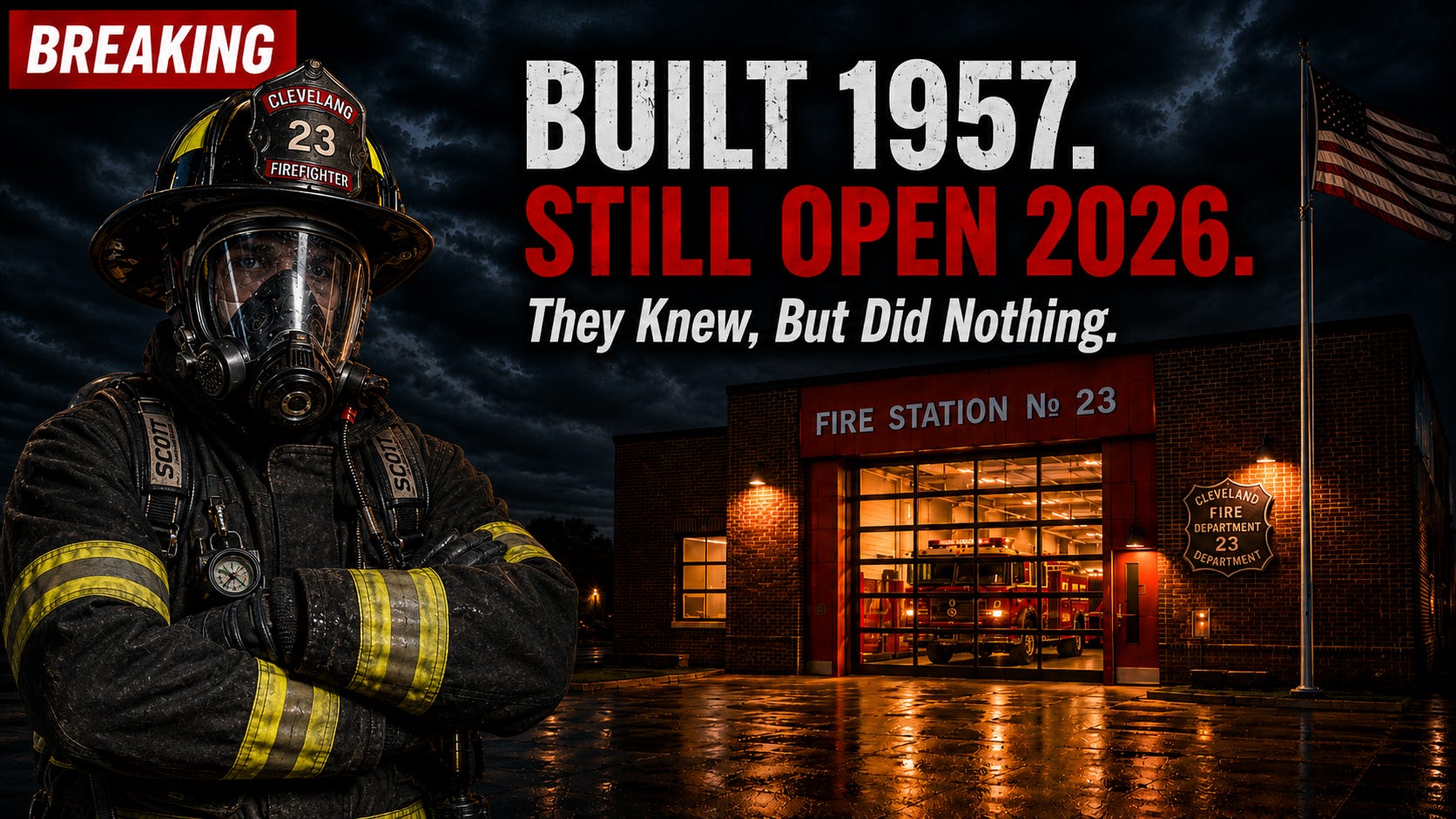
The need is real. Let me be honest about that.Fire Station 23 at 9826 Madison Avenue was built in 1957. Almost 70 years ago. The men and women who work there are heroes. Every shift they run toward the things the rest of us run away from.
What they are getting in return is a building that is slowly making them sick. Here is what every person in that council hearing agreed on — council members, fire department leadership, and the union representative from Local 93.
Toxic exhaust flows directly into the spaces where firefighters sleep and eat. Cancer causing particles. No real ventilation. An HVAC system that barely works. Windows that do not open. The union representative named firefighters who have already died from cancer. Nobody in that room disputed it.
And that station is still open today. Every council member acknowledged the conditions were deplorable. The union put cancer deaths on the record. The administration confirmed the building needs to be replaced.
And they are still sending people in there every single day.
When you put something on the public record — on camera in a city council hearing — those words do not disappear. If a firefighter gets a cancer diagnosis tomorrow and their attorney pulls up that transcript — the city is going to have a very hard time explaining why they kept sending people in there after admitting publicly what they knew. That is a problem the city created for itself.
The firefighters deserve a new building. Nobody is arguing against that. But you cannot use a crisis you helped create to justify taking shortcuts on somebody else’s rights.
Now Here Is Where It Gets Political.
In the same week two things happened at Cleveland City Council.
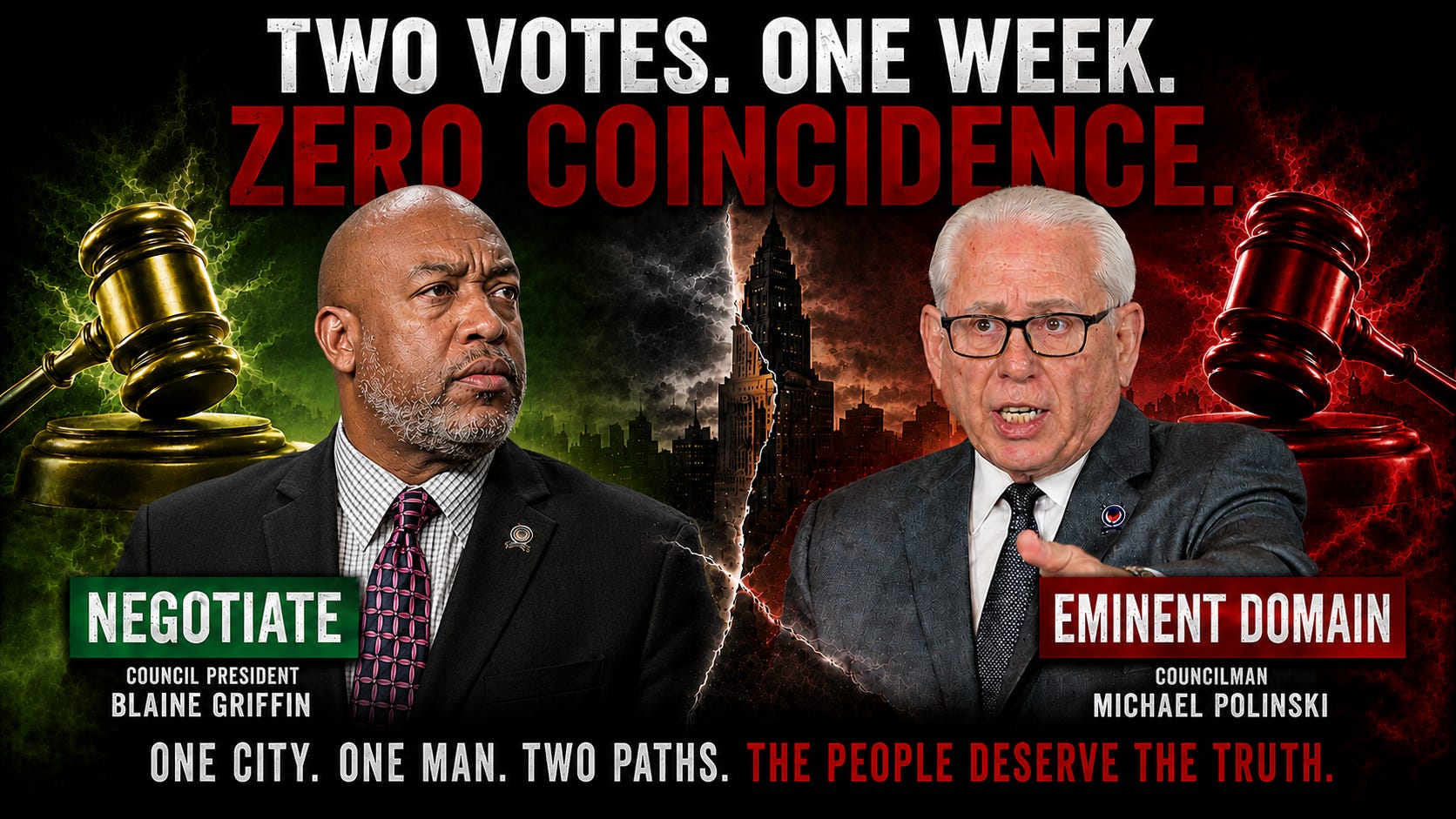
Ordinance 368-2026 passed. Council authorized negotiations with Shahida. Increased the offer to $1,025,000. Gave the administration the authority to sit down and work out a deal. That is the right way to do this.
But then — just days later — Councilman Polensek called a Public Safety Committee hearing. And they voted to move forward with Resolution 457-2026. The first official legal step toward taking Shahida’s property by force.
Both things. Same week. Now here is what most people did not catch. Some regular committee members could not be there that day. Polensek had two choices. Reschedule. Or wait for his full committee. He did neither.
Instead he appointed two pro tem members — Councilman Brian Kazy and Councilman Tanmay Shah. Let me be clear about why that matters.
Shah is the council member whose ward contains the proposed fire station site. The man pushing hardest for this eminent domain action from day one. The man with the most direct political stake in the outcome of that vote. Polensek put him on the committee voting on it. When the roll was called — Shah voted yes. This was not an oversight. This was not a scheduling conflict.
This was a deliberate move by someone who knew exactly what he was doing. The final vote — 4 to 1. Councilman Jones was the only no. The only one in that room who said out loud — this is not right. One voice. Four to one.
Now Here Is Where This Story Gets Personal.
Because this was not the first time Councilman Polensek made a commitment to his colleagues and then did something different.
During the redistricting process Polensek told multiple council members — not just the council president — that he was ready to retire. Done. Finished. People believed him. Because why would you say that if you did not mean it?
Councilman Anthony Harris sat down with Polensek in good faith. Had real transition conversations. And based on Polensek’s word — Harris gave up the majority of his ward. Polensek walked away with close to seventy percent of his original ward intact.
Then — in the last two weeks of the filing period — Polensek reversed course. Filed to run. Won his seat back. Harris was left holding the short end of a deal built on a promise that was never kept. Some people call that politics.
I call it what it looks like. There is a reason Dr. Maya Angelou said — “When someone shows you who they are — believe them the first time.”
Fool me once — shame on you. Fool me twice — shame on me.
Cleveland City Council has been on the wrong end of that saying twice with the same man. At some point you have to start paying attention.
A Negotiation With A Gun On The Table.
On one hand the city is saying — we want to negotiate. On the other hand the legal machinery to take his property is already running.
That is not a negotiation. That is negotiating under duress.
Shahida’s own attorney asked the city to hold off on the eminent domain resolution. Said both sides wanted to keep talking. Said they just needed time to close the gap on the appraisals. Council passed the resolution anyway.
Four to one.
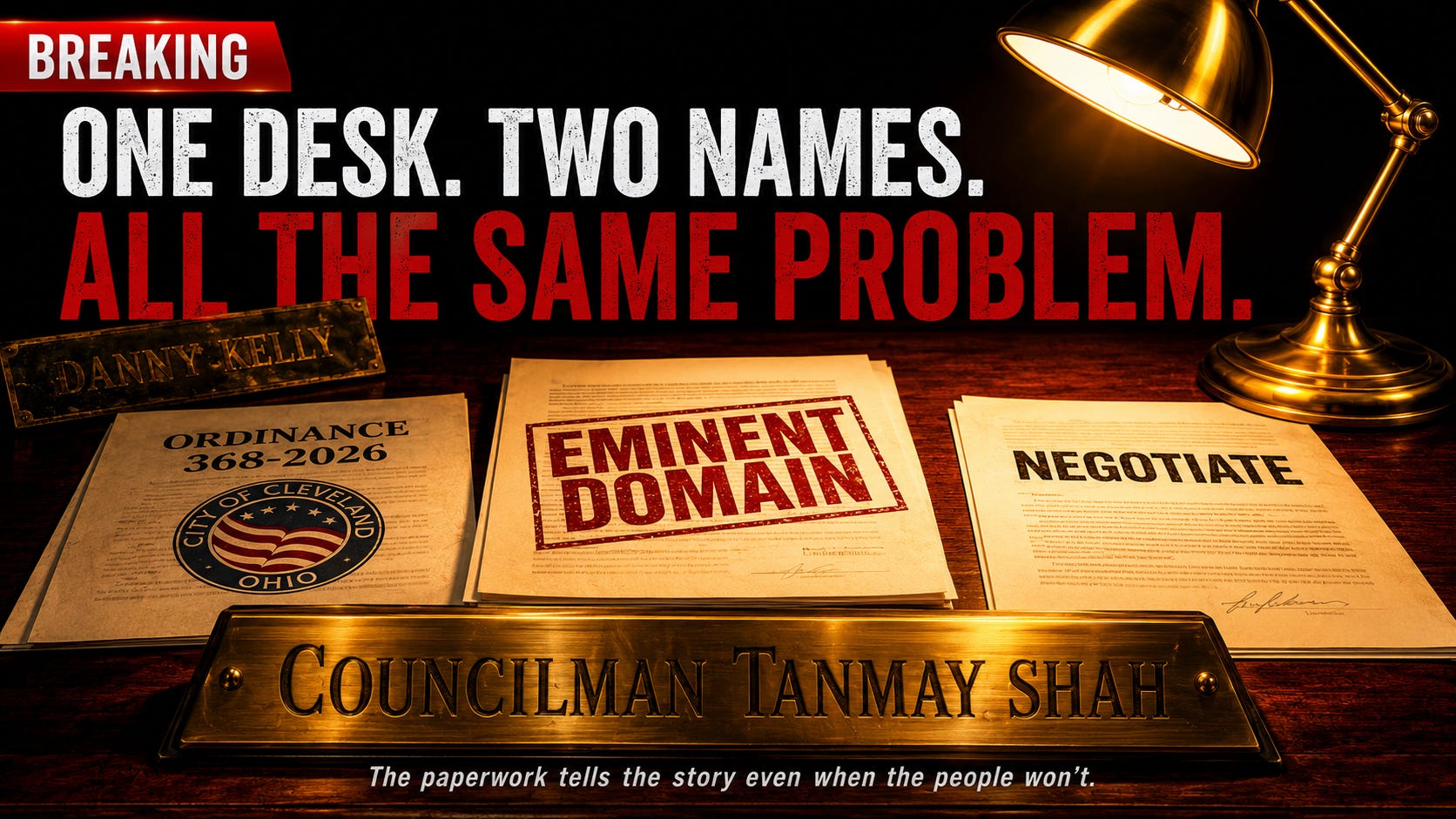
What Tanmay Shah Actually Said.
During the hearing Shah gave a closing statement. Not just about this property. About his philosophy. His exact words — on the public record:
“We as a city should be utilizing this tool more to push and incentivize the types of development we want to see in our city.” More. Not just for emergencies. More. To get the development they want to see.
And when Shahida’s attorney raised the concern about legal fees if the city walks away from court — “The cost of litigation is a cost of doing business. It doesn’t matter where you are. That is the United States of America. Everybody has a right to go to court.”
The cost of doing business. I want every small business owner in Cleveland to hear those words. I want every homeowner in Cleveland to hear those words.
Because those words tell you exactly where you stand when your interests conflict with what the city has decided it wants.
Let me explain something about real estate that most people do not think about.
When you buy a piece of property you do not always pay market value.
Sometimes you get a deal. You buy something below what it is worth. That is called a good investment. Sometimes you overpay. You buy something above what it is worth. That is called a bad investment.
And sometimes — the value of what you bought goes up after you buy it. Because of what you do with it. Because of what surrounds it. Because of what the market does. That is called appreciation. And it is the entire reason people invest in real estate in the first place. Now here is what people keep saying about Ibrahim Shahida.
He paid $1.375million for that property. Now he is saying it is worth $1.7 million. That is suspicious. That does not make sense. Let me tell you what does not make sense about that argument.
Real Estate Investing Works In Two Directions.
If Shahida had bought that property and the neighborhood had declined — if nothing happened around it, if the market ignored it, if it just sat there losing value — he could have lost hundreds of thousands of dollars on that investment.
Nobody would have blinked. Nobody would have said the city should pay him more than market value because he lost money.
The Risk Goes Both Ways. That Is What Investing Means.
So when the value goes up — when development plans come together, when the neighborhood starts moving, when an independent appraiser looks at the highest and best use of that corner and says this property is worth $1.7 million — that is not suspicious.
That Is How Real Estate Works.
The property owner’s own attorney said it plainly at the council hearing.
“The value of the property and the fair market value determination has nothing to do with the acquisition cost. What was paid is irrelevant for that determination.” He is right. And the city knows he is right.
Which is why in Post 3 we are going to get into exactly how fair market value is supposed to be determined in an eminent domain case — and why the method the city used to get to $635,000 tells a very different story than the method that gets you to $1.7 million.
One of those methods favors the property owner. One of them favors the city. You can probably guess which one the city chose.
Here Is The Bottom Line.
I am just going to lay out a few facts and let you sit with them.
Fact. The city’s appraisal says this property is worth $635,000. The owner’s appraisal says $1.7 to $2.2 million. That is a gap of over a million dollars.
Fact. To develop that property Shahida’s team needed approval from the Cleveland Landmarks Commission. They submitted their proposal in October 2025. It sat there for months. No resolution. No explanation.
Fact. A vacant property with no approved development plan is worth significantly less on paper than one with approved plans and signed tenants.
Fact. The city’s appraisal is based on what that property looks like right now. Vacant. Unoccupied. Producing nothing.
Fact. The same city conducting that appraisal oversees the Landmarks Commission process.
I am not saying those facts are connected. I am just saying those are the facts. You are smart enough to decide for yourself what they mean. And before we go — there is one more thing that came out of all of this that nobody is talking about.
When council members stood up in that hearing and described the conditions inside Fire Station 23 on the public record — they may have opened a door they cannot close.
Think about what they put on the record. Cancer causing conditions. Firefighters who have already died. A building everybody agreed was deplorable. And that station is still open today. That testimony is on camera. Timestamped. Documented.
If a firefighter who worked out of Station 23 gets a cancer diagnosis tomorrow — and their attorney pulls up that hearing transcript — the city is going to have a very hard time explaining why they kept sending people in there after admitting publicly what they knew.
This is not just about one property on Madison Avenue anymore. This could open the door to something much bigger. How many other fire stations across this city are in similar condition? How many firefighters are reporting to work every day in buildings that are slowly making them sick?
That is a question the city is going to have to answer. Not because someone asked nicely. Because it is now on the public record. Something good may actually come out of this entire mess. Not because the city did the right thing. But because they got caught saying the wrong thing in public.
And before I let you go — one more thing on the appraisal. People keep asking why the gap between the two numbers is so large. How does a property go from $575,000 to $1.7 million? That is how real estate works.
When you invest in property the value can go up. It can also go down. That risk goes both ways. Nobody questions it when an investor loses money. So nobody should question it when the value goes up either. The property owner’s own attorney said it plainly at the council hearing —
“The value of the property and the fair market value determination has nothing to do with the acquisition cost. What was paid is irrelevant for that determination.”
He is right. And in Post 3 — we are going to show you exactly why. Do not miss it.
I’m Kenn Dowell. Cleveland born. Glenville raised. And never afraid to say what needs to be said.
I’ll see you in Post 3.
This is a five-part civic intelligence series produced by Strategic Moves Media Network.